Track and Field Throws: The Strength, Power, and Mechanics Behind Every Event
Every throwing event places different physical demands on the athlete. Discover how strength, power, mobility, and technique influence performance in shot put, discus, hammer, weight throw, and javelin.
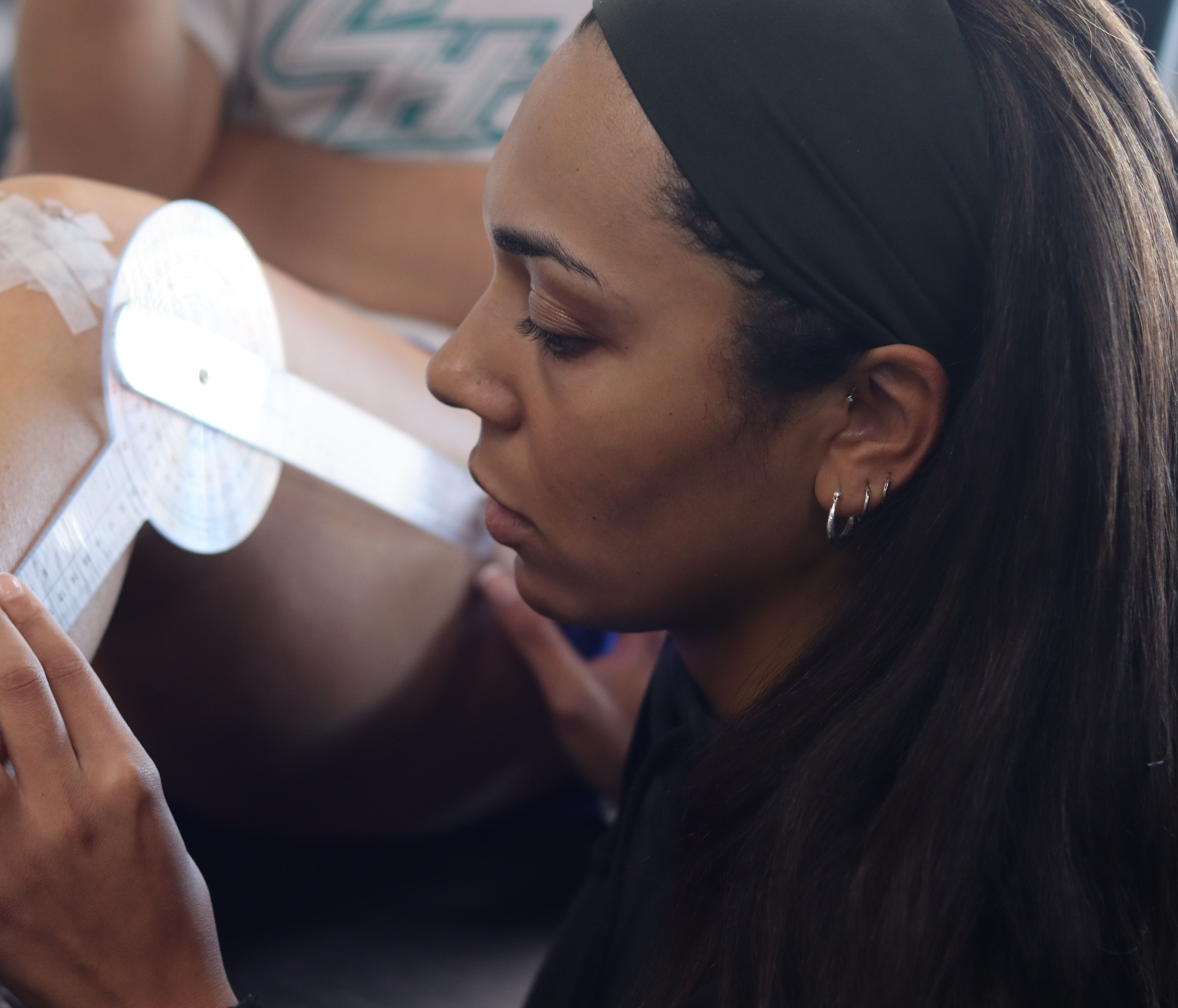
Lea Delgrippo, Performance Intern/ Taylor Bracy, DPT/ Sean Kelley, Strength and Conditioning Coach
Track and field throwing events are often grouped together, but each event places very different demands on the athlete.
Shot put requires explosive force over a short distance. Discus and hammer depend heavily on rotational speed and timing. Javelin combines runway speed with an overhead release, while the indoor weight throw challenges an athlete’s ability to control a heavy implement through multiple rotations.
Despite these differences, every successful throw depends on the same basic principle:
The athlete must generate force from the ground and transfer it efficiently through the entire body into the implement.
A strong upper body alone is not enough. Successful throwers need lower-body strength, rotational mobility, core control, coordination, technical skill, and the ability to produce force quickly.
Understanding the Five Throwing Events
Track and field includes five primary throwing events:
Shot put
Weight throw
Discus
Hammer throw
Javelin
Each implement has a different weight, shape, and method of delivery. These differences change how the athlete creates momentum, manages force, and prepares physically.
Shot Put
Shot put is performed during both the indoor and outdoor track seasons.
The athlete pushes a heavy metal ball from the neck or shoulder using one of two primary techniques:
The glide
The rotational technique
The glide is more linear, while the rotational technique allows the athlete to build momentum through a spinning movement similar to the discus.
Men typically compete with a 16-pound shot, while women use an 8.8-pound shot. Athletes may also train with implements of different weights to develop technical control, strength, and explosiveness.
Although the shot is released with the upper body, successful performance begins with the legs. The athlete must create force against the ground, transfer that force through the hips and trunk, and finish with an explosive arm action.
Weight Throw
The weight throw is an indoor event involving a heavy metal ball attached to a short handle.
The athlete performs multiple rotational turns before releasing the implement. Men typically use a 35-pound weight, while women use a 20-pound weight.
Because the implement is extremely heavy, the event requires significant:
Lower-body strength
Hip stability
Rotational control
Grip strength
Balance
Core stiffness
The athlete must build momentum without losing posture or position. Poor control during the turns can reduce throwing distance and increase stress through the hips, spine, and ankles.
Discus
The discus is a circular, disk-shaped implement thrown from a ring using a single rotational sequence.
Men typically throw a 4.4-pound discus, while women use a 2.2-pound discus.
Discus is lighter than the other rotational implements, but it is highly technical. Success depends on creating speed through the circle while maintaining balance and controlling the position of the implement.
Important qualities for discus include:
Rotational power
Hip-to-shoulder separation
Thoracic mobility
Balance
Release timing
Shoulder control
The athlete must also release the discus within a designated sector and remain inside the throwing circle until the implement lands. Stepping outside the circle or missing the sector results in a foul.
Hammer Throw
The hammer throw uses a heavy metal ball attached to a wire and handle.
The weight of the hammer is similar to the shot put, with men using a 16-pound implement and women using an 8.8-pound implement.
Unlike discus, hammer athletes typically complete several turns before release. During each turn, the athlete increases the speed of the implement while maintaining balance and body position.
Hammer throwing demands tremendous coordination. The athlete must manage the pull of the implement while continuing to apply force through the ground.
Important physical qualities include:
Rotational strength
Lower-body force production
Hip and ankle stability
Grip strength
Trunk control
Balance under high torque
The hammer throw is commonly introduced at the collegiate level because of the equipment, space, and technical demands involved.
Javelin
Javelin is the most linear of the throwing events.
The athlete uses a runway to build speed before transitioning into crossover steps and a penultimate stride prior to release.
Men typically throw an 800-gram javelin, while women use a 600-gram javelin.
Unlike the other events, javelin includes a significant sprinting component. The athlete must carry horizontal speed into the final throwing position without losing control.
A successful javelin throw requires:
Runway speed
Shoulder mobility
Trunk rotation
Hip-to-shoulder separation
Front-leg blocking strength
Release-angle control
Proper follow-through
Release mechanics are especially important. Poor positioning or an inefficient release angle can increase stress through the shoulder and medial elbow.
Throwing Is a Full-Body Skill
It is easy to assume throwing is primarily an upper-body action.
In reality, the arm is only the final link in a much larger chain.
Force typically travels through the following sequence:
Ground → legs → hips → trunk → shoulder → arm → implement
When each segment contributes at the correct time, the athlete can transfer more energy into the throw.
When the sequence breaks down, force is lost. The athlete may also compensate by placing excessive stress on the shoulder, elbow, lower back, or hips.
This is why technical throwing practice must be supported by physical preparation.
What Physical Characteristics Help Throwers Succeed?
Successful throwers often possess several helpful physical characteristics, including:
Greater body mass
Taller stature
Longer limbs
Larger muscle cross-sectional area
High levels of strength and power
Favorable muscle and neural characteristics
Greater muscle size can support higher force production, while longer limbs may create mechanical advantages during the throw.
However, physical size alone does not guarantee success.
A thrower must still coordinate their body, control the implement, and apply force in the correct direction. An athlete with excellent size and strength may still underperform if they lack mobility, timing, or technical efficiency.
Common Injuries in Throwers
Each throwing event exposes the athlete to different stresses.
Understanding these patterns can help clinicians and coaches identify areas that require additional preparation.
Shot Put Injuries
Shot putters may experience lower-back issues due to the high rotational and compressive forces involved in the glide or rotational technique.
Common concerns include:
Lumbar muscle strains
Disc irritation
Facet joint pain
General low-back discomfort
If the athlete lacks hip or thoracic mobility, they may compensate by creating excessive movement through the lumbar spine.
Discus Injuries
Discus athletes commonly experience shoulder problems when force is not transferred efficiently through the kinetic chain.
Potential issues include:
Shoulder impingement
Rotator cuff irritation
Scapular dyskinesis
General shoulder pain
If the legs, hips, or trunk fail to contribute appropriately, the shoulder may attempt to create more of the throw by itself.
Hammer and Weight Throw Injuries
Hammer and weight athletes experience substantial rotational forces through the hips and lower extremities.
Common concerns include:
Groin strains
Hip labral irritation
Ankle sprains
Stress-related injuries
Lower-back pain
The athlete must repeatedly control large forces while rotating at high speed. Adequate hip mobility, foot control, and trunk stability are essential.
Javelin Injuries
Javelin athletes are especially vulnerable to shoulder and elbow injuries because of the explosive overhead release.
Potential injuries include:
Ulnar collateral ligament strain or tear
Flexor tendon irritation
Ulnar nerve symptoms
Rotator cuff problems
Shoulder impingement
Technical errors, fatigue, insufficient shoulder strength, and poor trunk contribution may all increase stress on the throwing arm.
What Should Be Included in a Thrower’s Evaluation?
A performance evaluation for a thrower should examine more than how much weight the athlete can lift.
The evaluator should look for mobility limitations, strength deficits, side-to-side differences, and compensatory movement patterns.
Important observations include:
Excessive asymmetry
Scapular winging
Hip mobility restrictions
Limited rotational mobility
Excessive shoulder compensation
Poor separation between the hips and upper body
Limited wrist mobility, particularly in shot putters
The evaluation should reflect the athlete’s specific event. A javelin athlete will require more detailed overhead shoulder testing, while a hammer athlete may need greater emphasis on hip, ankle, and rotational control.
Range-of-Motion Testing
Important mobility areas include:
Shoulder Mobility
Testing may include:
Internal rotation
External rotation
Flexion
Horizontal movement
Extension
Shoulder motion should be assessed while controlling the rib cage and trunk. An athlete may appear to have adequate shoulder range by extending through the lower back or rotating the torso.
Thoracic Spine Mobility
Thoracic rotation and extension are critical for creating separation between the pelvis and upper body.
Limited thoracic movement may increase compensation through the lumbar spine or shoulder.
Hip Mobility
Hip internal and external rotation should be assessed because the hips play a major role in every throwing event.
Hip extension is also important, particularly during the delivery phase of shot put and javelin.
Ankle Mobility
Ankle mobility and stability affect balance, force production, and rotational control.
This is especially important for athletes who perform multiple turns, such as hammer and weight throwers.
Core Testing for Throwers
The core must do more than create movement.
It must also resist unwanted motion while transferring force between the lower and upper body.
Useful assessments may include top-down flexion, bottom-up flexion, rotational control, and lateral trunk strength.
Top-Down Flexion
In a top-down flexion test, the athlete performs a controlled sit-up while the ankles are stabilized.
This provides information about the athlete’s ability to control trunk flexion.
Bottom-Up Flexion
During bottom-up flexion testing, the athlete lowers the legs while attempting to maintain trunk and pelvic position.
Loss of control may indicate difficulty resisting lumbar extension.
Rotational Control
Rotational testing examines whether the athlete can maintain a neutral position while resisting forces applied to the upper and lower body.
This is important because throwers must produce rotation without losing control through the pelvis or spine.
Lateral Core Strength
Side-to-side trunk testing may identify asymmetries in lateral core strength or endurance.
Significant differences may influence rotational control and force transfer during the throw.
Strength and Power Testing
Objective testing helps identify whether a thrower needs more force, more speed, or improved coordination.
Useful performance tests may include:
Isometric mid-thigh pull
Squat jump
Countermovement jump
Force plate analysis
Shoulder internal-rotation strength
Shoulder external-rotation strength
Hip strength testing
Grip or wrist testing
The isometric mid-thigh pull provides information about maximal force production.
Jump testing helps show how efficiently the athlete expresses force dynamically.
Shoulder and hip strength testing can identify asymmetries that may affect force transfer or injury risk.
The goal is not to collect the largest possible number of metrics. Testing should identify the athlete’s limiting qualities and directly influence the training plan.
Training Priorities for Throwers
A complete throwing program should develop strength, power, mobility, and technical control.
Rotational Power
Medicine-ball rotational throws are among the most useful exercises for developing explosive rotational ability.
The athlete learns to create force through the legs and hips before transferring it through the trunk and arms.
Hip-to-Shoulder Separation
The hips and shoulders should not always rotate at the same time.
Effective separation allows the athlete to store and release rotational energy.
Exercises that develop controlled separation include:
Split-stance cable rotations
Rotational medicine-ball throws
Cable lift-offs
Controlled plate rotations
Lower-Body Strength
Throwers need strong legs to create force against the ground.
Depending on the athlete, training may include:
Squat variations
Deadlift variations
Split squats
Lunges
Isometric strength exercises
Strength exercises should support the positions and force demands of the athlete’s event.
Explosive Strength
Maximal strength is valuable, but throwing occurs quickly.
Athletes must also train the ability to express force at high speed.
Useful exercises may include:
Jump variations
Rotational jump lunges
Medicine-ball throws
Olympic lifting variations
Velocity-based resistance training
Shoulder and Scapular Control
Throwers need strong rotator cuff and scapular muscles to control the shoulder during high-speed movement.
Exercises may include:
Shoulder internal- and external-rotation work
Serratus wall walks
Scapular control drills
Dumbbell triceps pullovers
Cable-based upper-body exercises
Wrist and Forearm Strength
The wrist and forearm influence implement control and release mechanics.
Wrist flexion and extension exercises may be particularly useful for shot put, discus, hammer, and weight athletes.
Technique Must Guide Physical Preparation
A stronger athlete is not automatically a better thrower.
Physical improvements only matter when they support event-specific technique.
A shot putter must be able to build momentum and finish without fouling.
A discus athlete must control a single rotational sequence and release inside the sector.
A hammer athlete must progressively accelerate the implement through multiple turns.
A javelin athlete must transfer runway speed into a controlled block and overhead release.
Each event requires a different expression of strength and power. Training should prepare the athlete for those specific demands rather than relying on a generic throwing program.
Final Thoughts
Track and field throwing events combine some of the highest levels of strength, speed, coordination, and technical precision in sport.
Although each event uses a different implement and technique, the central performance principle remains the same:
Force must be generated from the ground, transferred through the body, and delivered into the implement efficiently.
The most successful throwers are not simply the biggest or strongest athletes. They are athletes who combine strength with mobility, timing, rotational control, and explosive power.
A comprehensive program should evaluate the entire kinetic chain, address the athlete’s individual limitations, and connect every exercise to the demands of the event.
When technique, strength, mobility, and power are developed together, athletes are better prepared to throw farther, compete consistently, and reduce their risk of injury.
Rehab, different.
Not a clinic. Not a gym.
A place built for progress.
A team built for performance.
A culture built for you.