Groin Pain in Athletes: Understanding the Injury and Building a Return-to-Sport Plan
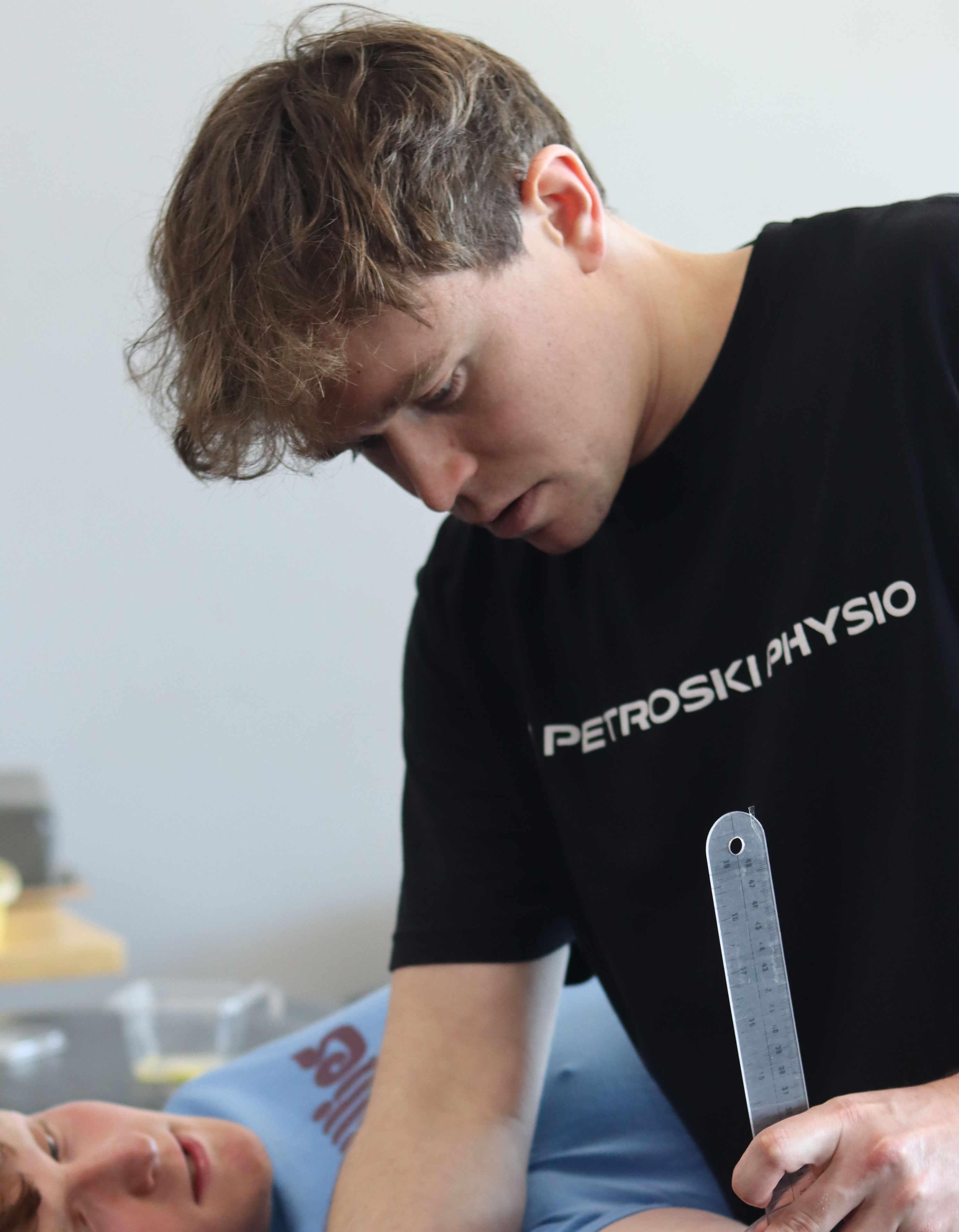
Frank Schoepfer SPT, Pat Meenan DPT
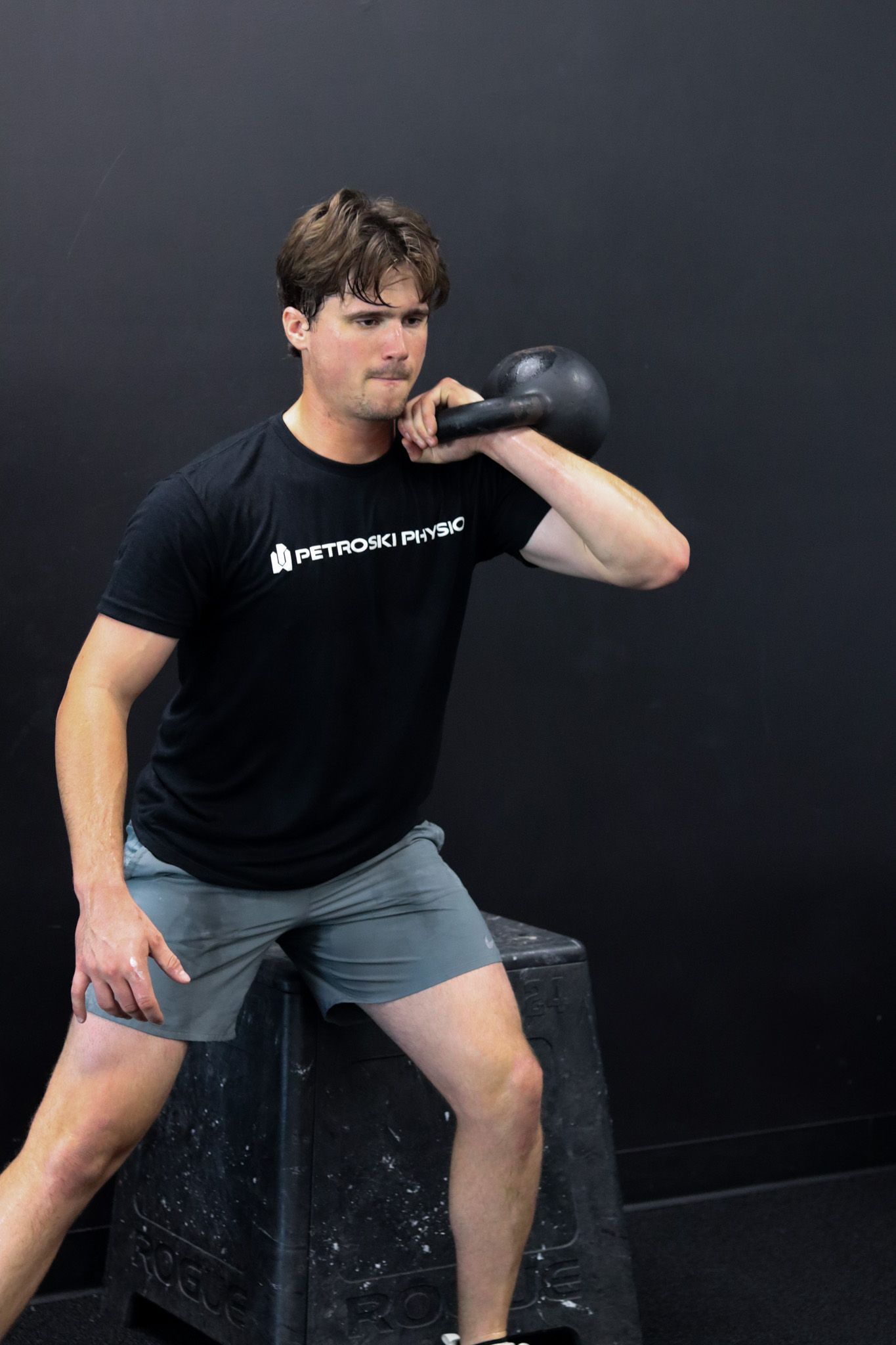
Groin pain can be one of the more frustrating injuries for an athlete.
It may happen suddenly while reaching for a ball, cutting, sprinting, or kicking. Or it may build gradually over several weeks until something that initially felt like tightness starts affecting practices, lifting, or competition.
The challenge is that groin pain is not one specific injury.
Several structures around the hip, pelvis, abdomen, and adductors can cause symptoms in a similar area. With longer-standing groin pain, more than one structure may be contributing at the same time.
That is why rehabilitation needs to start with more than simply identifying that the groin hurts. We need to understand where the symptoms may be coming from, what movements and loads provoke them, what physical capacities may be limited, and what the athlete's sport requires them to tolerate again.
Not All Groin Pain Is the Same
Athletic groin pain can be separated into several major categories:
Adductor-related groin pain
Iliopsoas-related groin pain
Inguinal-related groin pain
Pubic-related groin pain
Hip-related groin pain
An athlete may fit primarily into one category, but there can be overlap.
For example, a soccer player may have tenderness near the adductor origin and pain during resisted adduction while also experiencing symptoms with hip flexion and kicking.
The location of the pain gives us useful information, but it is only the beginning. We also need to understand how the injury started and how the symptoms behave.
How Did the Groin Pain Start?
One of the first questions we ask is whether the symptoms started suddenly or gradually.
An acute injury may happen during a specific movement. An athlete might plant to change direction and immediately feel a pull. A soccer player might reach into hip abduction for a ball and feel sharp pain. A hockey player might push aggressively off one leg and feel something in the groin.
That can look very different from an athlete who cannot identify one specific moment and instead noticed increasing soreness over several weeks.
With gradual-onset symptoms, workload becomes especially important.
Did practice volume increase? Are you playing more games? Did your sprinting volume change? Were more cutting or kicking drills added? Did you return from an offseason and rapidly increase training? Did your lifting program change?
Sometimes the question is not only which structure hurts. We also need to understand why the demands placed on that area may have exceeded its current capacity.
Before Rehab, We Need to Rule Out Other Causes
Not every symptom in the groin comes from a muscle or tendon injury.
The groin is close to several anatomical regions, so symptoms can occasionally come from structures outside the typical musculoskeletal injuries we see in athletes.
Depending on the presentation, clinicians may need to consider hernias, stress fractures, nerve-related conditions, abdominal pathology, or other medical causes.
This is one reason the history and subjective examination are important. Unexplained night pain, neurological symptoms, significant changes in bowel or bladder function, systemic symptoms, or pain that does not behave like a typical musculoskeletal injury may warrant further medical evaluation.
Good rehabilitation starts with determining whether rehabilitation is the appropriate treatment.
The Evaluation: Where Does It Hurt?
Once more serious conditions have been considered, we can begin classifying the athlete's presentation. The location and behavior of the symptoms can provide useful clues.
Adductor-Related Groin Pain
This commonly involves pain and tenderness along the adductor muscles or near their attachment around the pubic bone.
Symptoms may occur during cutting, kicking, sprinting, rapid changes of direction, wide lateral movements, or resisted hip adduction.
For field and court athletes, the adductors need to tolerate significant forces at high speeds. Building strength is important, but eventually that strength needs to carry over to the positions, velocities, and situations the athlete encounters in sport.
Iliopsoas-Related Groin Pain
These symptoms may be more anterior and can be aggravated by activities that require repeated or forceful hip flexion.
That may include sprinting, kicking, running uphill, high-knee positions, rapid leg recovery during running, or resisted hip flexion.
We want to know more than whether hip flexion hurts. We also want to understand how much force the athlete can produce, which positions provoke symptoms, and how those findings compare with the opposite side.
Pubic-Related Groin Pain
Pain may be located around the pubic symphysis and can occur alongside adductor or abdominal symptoms.
Because several muscles and connective tissues interact around the pelvis, these presentations may require us to look beyond one isolated muscle.
Inguinal-Related Groin Pain
Symptoms may occur around the inguinal canal and can sometimes be aggravated by abdominal loading, coughing, or certain athletic movements.
These cases require careful assessment because other conditions, including hernias, may cause symptoms in a similar area.
Hip-Related Groin Pain
Sometimes the groin itself is not the primary problem.
The hip joint can refer pain into the groin, which is why hip range of motion, strength, symptoms, and movement tolerance are important parts of a comprehensive groin evaluation.
Why We Use Provocative Testing
One test rarely gives us the entire answer. Instead, we combine multiple findings to build a clearer clinical picture.
For example, we may use an adductor squeeze test to determine whether contracting the adductors reproduces the athlete's familiar symptoms.
We may also assess:
Resisted hip adduction
Resisted hip flexion
Resisted abdominal movements
Straight-leg raise variations
Hip range of motion
Muscle length
Palpation of relevant structures
If an athlete has pain during an adductor squeeze, tenderness at the adductor origin, and symptoms during cutting and kicking, those findings together are more useful than any single positive test.
We are looking for a pattern rather than relying on one test.
Strength Testing Matters
Once we have identified the likely source of the athlete's symptoms, we also need to understand their current physical capacity.
This is where rehabilitation starts becoming more performance-focused.
We may objectively assess hip adduction, abduction, flexion, extension and rotation strength, along with trunk strength and side-to-side differences.
For athletes, simply asking someone to push against a clinician's hand may not always provide enough information. When appropriate, objective strength testing allows us to quantify force production and compare sides.
If the painful leg produces substantially less adduction force than the uninvolved leg, that gives us useful information. It also gives us something we can retest throughout rehabilitation rather than relying only on whether the athlete feels stronger.
Groin Rehab Is Not Just About the Groin
The adductors do not function in isolation.
They work with the hip, pelvis, trunk, and lower extremity during athletic movement.
A soccer player does not perform an isolated adduction exercise before kicking a ball. They plant one foot, control the trunk and pelvis, rotate through the body, accelerate the kicking leg, strike the ball, and then decelerate.
A basketball player cutting has to coordinate the foot, ankle, knee, hip, pelvis, and trunk while absorbing and redirecting force.
That is why we evaluate the entire lumbopelvic system.
This may include:
Squatting
Lunging
Hinging
Single-leg balance
Walking and running mechanics
Pelvic control
Trunk control
Change of direction
The painful structure may be where rehabilitation begins, but it should not necessarily be where rehabilitation ends.
Stage 1: Calm the Symptoms
Early rehabilitation depends heavily on how irritable the symptoms are.
If an athlete has significant pain during walking and everyday activity, immediately jumping into aggressive sprinting and cutting probably is not appropriate.
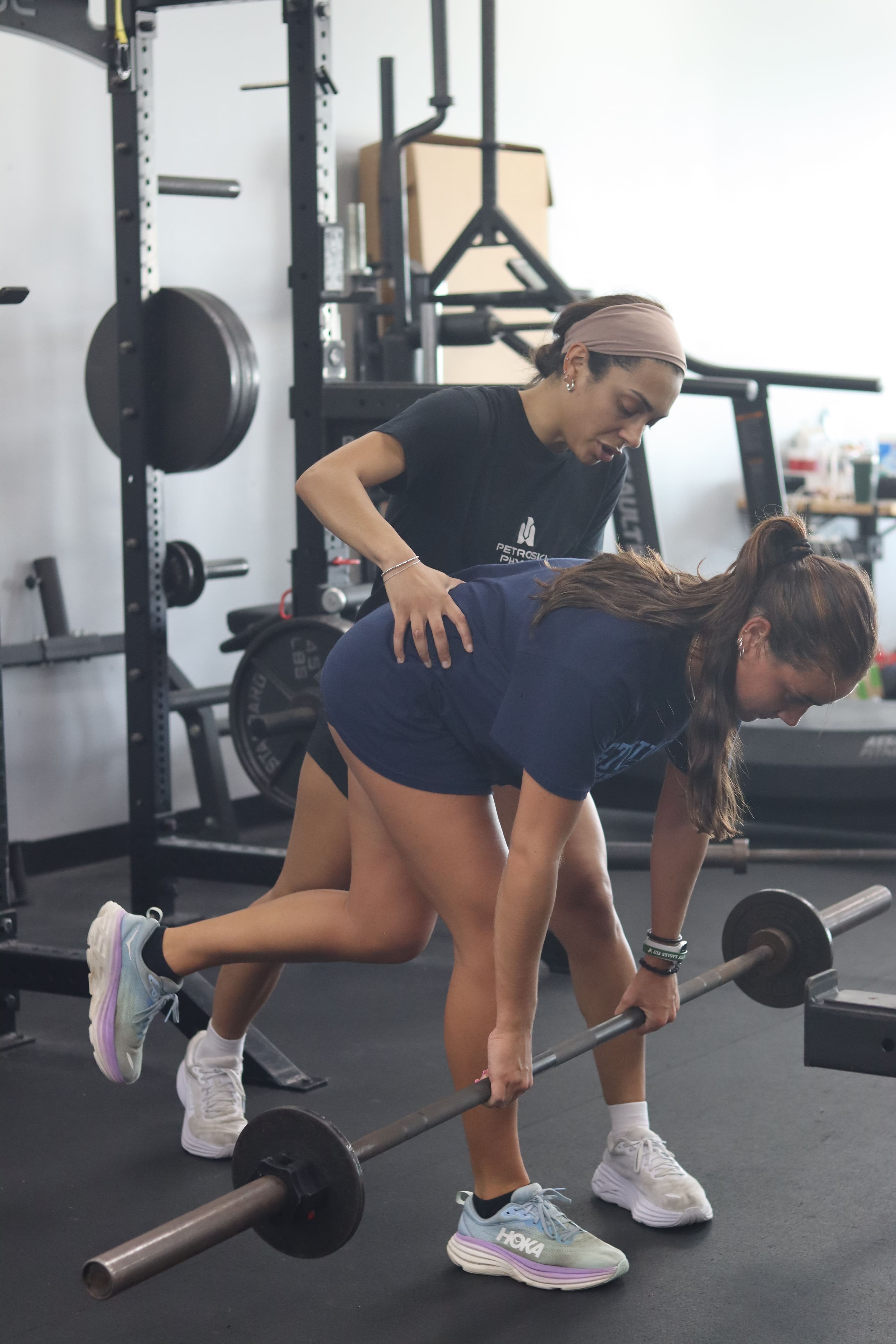
Instead, we may temporarily modify training volume and identify exercises the athlete can tolerate. The goal is not necessarily complete rest. It is finding an appropriate dose of load.
This may include lower-level isometric or isotonic strengthening, restoring comfortable hip motion, and temporarily reducing aggravating activities.
The starting point is figuring out what the athlete can currently tolerate without creating an unacceptable response. Then we build from there.
Stage 2: Build Capacity
As symptoms become better controlled, strengthening can become progressively more challenging.
Depending on the athlete's presentation, this may include:
Adductor isometrics
Progressive adductor strengthening
Copenhagen variations
Hip flexor strengthening
Split-squat variations
Lateral lunges
Single-leg strengthening
Trunk and pelvic strengthening
Multi-directional lower-extremity loading
The goal is not simply to find exercises that do not hurt. Over time, we need to progressively increase force, range of motion, volume, and eventually speed.
An athlete may feel good performing low-load exercises in the clinic but still be unprepared for the demands of competition.
Stage 3: Integrate the Entire System
As capacity improves, rehabilitation can become less isolated.
We may begin combining lower-extremity strength with greater trunk and pelvic demands. An athlete might progress from a simple adductor exercise to loaded lateral patterns, rotational exercises, single-leg tasks, and movements requiring greater pelvic control under load.
Sport does not happen lying on a treatment table. The athlete eventually needs to transfer their strength into meaningful movement.
Stage 4: Bring Back Speed
This is where rehabilitation begins to look more like sport.
An athlete can have excellent strength numbers and still not be prepared for a high-speed cut because force capacity and applying force at high speed are not exactly the same thing.
Eventually, the athlete may need exposure to:
Running
Acceleration
Deceleration
Sprinting
Lateral movement
Change of direction
Reactive movement
Plyometrics
For some sports, kicking also needs to be specifically reintroduced.
A soccer player's groin may feel completely normal during strength testing but become symptomatic when striking a ball at full speed.
Kicking can therefore be progressed from controlled passing to longer passes, submaximal striking, higher-velocity shooting, and eventually sport-specific drills.
Preparing for full-speed sport requires gradually reintroducing the demands of full-speed sport.
Return to Sport Is Not One Test
There is not one universally accepted test that determines whether an athlete with groin pain is ready to return to sport.
Instead, return-to-sport decisions should combine several pieces of information.
Depending on the injury and sport, we may look for:
Full or appropriate pain-free range of motion
Minimal symptoms with palpation and provocative testing
Strong adductor and hip force production
Acceptable side-to-side strength differences
Pain-free or well-tolerated sprinting
Successful change of direction
Tolerance to sport-specific drills
Confidence during high-speed movement
An appropriate response the following day
For strength testing, a common goal may be getting side-to-side differences within approximately 10%, but symmetry should never be the only clearance criterion.
An athlete can be symmetrical because both sides are weak.
That is why we want to consider more than the opposite leg. When available, we can also consider previous testing, the athlete's sport and position, and the actual demands they are preparing to return to.
Chronic Groin Pain Requires a Different Conversation
Not every groin injury resolves quickly.
Some athletes deal with symptoms for months or even multiple seasons. These cases can become more complicated because multiple structures may be sensitive, and athletes may begin avoiding certain movements.
With chronic groin pain, we are often not looking for one exercise or manual therapy technique that immediately fixes the problem. The focus becomes progressively rebuilding tolerance.
That might mean increasing adductor strength, followed by running volume, controlled cutting, higher-intensity cutting, reactive movement, portions of practice, full practice, and eventually competition.
This graded exposure allows each stage to prepare the athlete for the next rather than making the jump from rehabilitation exercises directly into a game.
Pain Does Not Always Mean You Are Going Backward
Athletes dealing with chronic groin pain can understandably become concerned when they feel symptoms during rehabilitation.
Some symptoms during progressive loading do not necessarily mean the injury is worsening. The context matters.
We want to know how intense the symptoms were, whether they changed how the athlete moved, how quickly they settled, how the athlete felt later that day and the following morning, and what their overall training load looked like.
That information can help us adjust frequency, intensity, duration, and volume instead of automatically removing every activity that produces discomfort.
The goal is to find an appropriate training dose that allows the athlete to progress without repeatedly overwhelming their current capacity.
The Goal Is Bigger Than Getting Rid of Pain
Pain reduction matters, but for an athlete, it is not the entire goal.
Consider a soccer player who no longer has pain while walking, climbing stairs, or performing an adductor squeeze. That is progress.
But can they sprint? Can they cut? Can they open their hips to receive a ball? Can they strike a long pass? Can they shoot at full velocity? Can they perform those movements repeatedly during training?
And can they return the next day and tolerate another session?
That is the difference between reducing symptoms and preparing an athlete for sport.
How We Approach Groin Pain at Petroski Physio
At Petroski Physio, our goal is to understand what is driving an athlete's symptoms and identify the gap between their current capacity and the demands of their sport.
That may include evaluating:
Injury mechanism and symptom history
Location and irritability of symptoms
Hip and spine mobility
Adductor and hip strength
Trunk and pelvic capacity
Functional movement
Running and sprinting
Change-of-direction ability
Sport-specific tasks
Current training workload
From there, rehabilitation can progress from managing symptoms and building capacity to integrating the entire system, adding speed, reintroducing sport-specific demands, and progressing back into practice and competition.
The goal is not simply for the groin to feel better in the clinic. The athlete needs to be prepared for what happens when the speed and demands of the game increase.
The Takeaway
Groin pain in athletes is not one diagnosis, and it should not receive one generic rehabilitation program.
Adductor-related, iliopsoas-related, inguinal-related, pubic-related, and hip-related presentations can overlap and may require different priorities.
The first step is understanding what is contributing to the athlete's symptoms. From there, rehabilitation should progressively rebuild the qualities their sport requires, including strength, mobility, trunk and pelvic control, running capacity, sprinting, cutting, kicking, and high-speed movement.
At Petroski Physio, the finish line is not simply that the athlete no longer has pain. We also want to understand whether they can perform, tolerate the demands of their sport, and come back ready to do it again.
That is what return to sport should prepare them for.
This article is intended for educational purposes and does not replace an individualized medical or physical therapy evaluation. Groin pain can occasionally result from conditions requiring additional medical evaluation. Persistent, severe, unexplained, or systemic symptoms should be assessed by an appropriate healthcare professional.
Dealing with groin pain that is limiting your training or sport? Schedule an evaluation at Petroski Physio to identify what may be contributing to your symptoms and build a rehabilitation plan around the demands of your sport.
Rehab, different.
Not a clinic. Not a gym.
A place built for progress.
A team built for performance.
A culture built for you.