Why Your Arm Feels Sore and Tired After Throwing and what to do about it.
Pat Meenan
You just finished a heavy throwing day.
It may have been your longest outing in a while or a heavier throwing day than usual. Typically your arm may feel sore, of heavy or tired. You know your not injured but something is definitely not right.
You go home, maybe stretch a little, maybe do some band work, maybe have a post throwing or day after routine or maybe you do nothing at all hope it feels better tomorrow. Sometimes it does and other times the soreness lingers longer than you would like.
And over time, the soreness starts to stack up.
What’s Actually Happening to Your Arm After You Throw
Every time you throw your body takes on stress. This applies to every one from pitchers, shortstops to quarterbacks. Those stresses create physical changes. Your shoulder can lose range of motion. Your muscles may change length. Your forearm and elbow absorb more load than they should. Your nervous system is still recovering even a full day later.
These symptoms are normal but its common not to do anything about it.
Most athletes should be paying attention to this.
They wait until something actually hurts and becomes pain or injury. And by then, they’re already behind.
What “Arm Care” Really Means (And Why It Matters)
Arm care gets thrown around a lot, but most athletes misunderstand it. To take care of your arm its a full system approach. It involves a throwing plan, a strength and performance plan, physical therapy, eating right, sleeping right and a plethora of other factors. But for ease of understanding when were referring to arm care in this post, we are strictly discussing the soft tissue and lower intensity sessions for the arm.
It’s not a full rehab session. It’s not diagnosing an injury. And it’s not meant to magically “fix” your arm in one day. Instead, it’s something much more practical.
Arm care is targeted recovery for overhead athletes.
It’s designed to:
reduce soreness
restore movement
improve how your arm feels immediately
prepare you for your next throwing session
The goal isn’t long-term change in one visit.
The goal is simple:
You walk in feeling beat up and leave feeling better, looser, and more ready to throw again.
What a Proper Arm Care Session Actually Looks Like at Petroski
A real arm care session isn’t random stretching or someone just “working on your arm.” There’s a clear structure behind it.
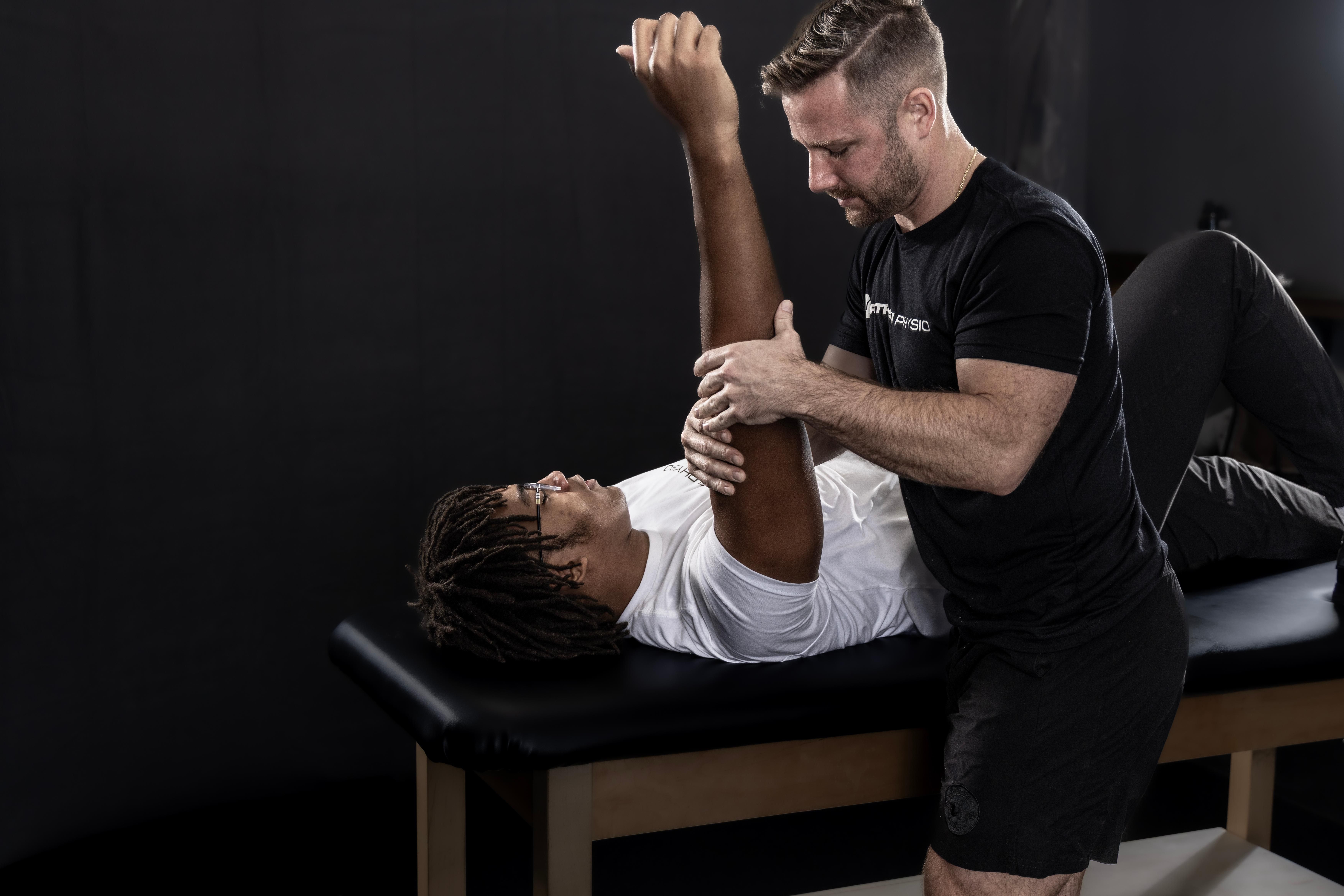
It usually starts with a quick conversation and movement check. You’re asked where you feel tight, when it shows up, and what doesn’t feel right. Then your shoulder, elbow, and forearm are moved through a few positions not to analyze everything, but to figure out where to focus that day.
From there, the first priority is restoring what you just lost from throwing.
After a heavy throwing session, most athletes lose some combination of shoulder internal rotation, overhead mobility, and posterior shoulder flexibility. The quicker you get that back to baseline the better chance you have to maintain long term arm health. So the session focuses on gently regaining that movement. Nothing aggressive. No forcing positions. Just controlled work to bring your arm back toward normal.
Next comes light activation.This is where most athletes make a mistake on their own. They either skip this entirely or go way too hard.
After throwing, your body is still recovering. Your nervous system is fatigued. So instead of trying to “train,” the goal here is to wake things back up. Low-intensity holds. Controlled movements. Re-engaging your rotator cuff and shoulder in the positions you actually use when you throw.
Done right, this is what helps your arm feel fresh again.
The Part Athletes Feel the Most: Soft Tissue Work
This is what most people think arm care is and it’s a big part of it.
But it’s not just randomly working on your shoulder.
It’s targeted.
A proper arm care session will usually address:
the front of your shoulder and pec
your biceps (especially near the elbow)
your forearm, which takes on a massive load when you throw
your lats and posterior shoulder
your triceps
even your hand and grip
That last one matters more than most athletes realize. You’re gripping a baseball hundreds of times during a throwing session. That tension builds up.
The goal of soft tissue work is simple:
Improve tissue quality so your arm can move and recover better.
And yes, this part should feel like something. Not unbearable but not light either.
Why the Best Throwers Take Arm Care Seriously
If you look at high-level athletes like professional pitchers, elite quarterbacks, top-level throwers they all have one thing in common:
They don’t guess with recovery.
They don’t wait until something hurts. They don’t rely on random routines. And they don’t treat recovery like it’s optional.
They stay consistent with taking care of their arm.
Even outside of rehab settings, almost every high-level athlete is getting some form of regular soft tissue work or recovery treatment.
Not because it’s trendy.
Because it works.
The Mistakes That Lead to Arm Problems
Most throwing-related issues don’t come from one big moment. They come from small things that get ignored over time.
The most common mistakes are simple:
Waiting until there’s actual pain before doing anything
Assuming rest alone will fix everything
Doing band work but ignoring tissue quality
Thinking soreness doesn’t matter
None of those are catastrophic on their own.
But over weeks and months, they add up.
What You Should Start Doing Now
If you’re serious about your performance and staying healthy, you don’t need to overhaul everything overnight. You just need to be more intentional.
After heavy throwing days, prioritize recovery within the first 24–48 hours. Keep intensity low and focus on restoring how your arm moves and feels. Pay attention to early signs like tightness, stiffness, or loss of motion. Throughout the week, know what days to kick up intensity and what days to throttle down. Make sure you prioritize eating and sleeping. Take note of any other stressors. And lastly, Don’t wait until something is wrong to take care of your arm. If your experiencing regular soreness, and you can do something about it then do it.
Obviously, this does not take the place of workload management, and strength work, but it is a good place to start helping you feel better.
Rehab, different.
Not a clinic. Not a gym.
A place built for progress.
A team built for performance.
A culture built for you.