Scapular Dyskinesia in Overhead Athletes
Scapular dyskinesia is common in overhead athletes, but it is often misunderstood. Learn what it actually is, when it matters, and how proper assessment and treatment can improve performance and reduce injury risk.
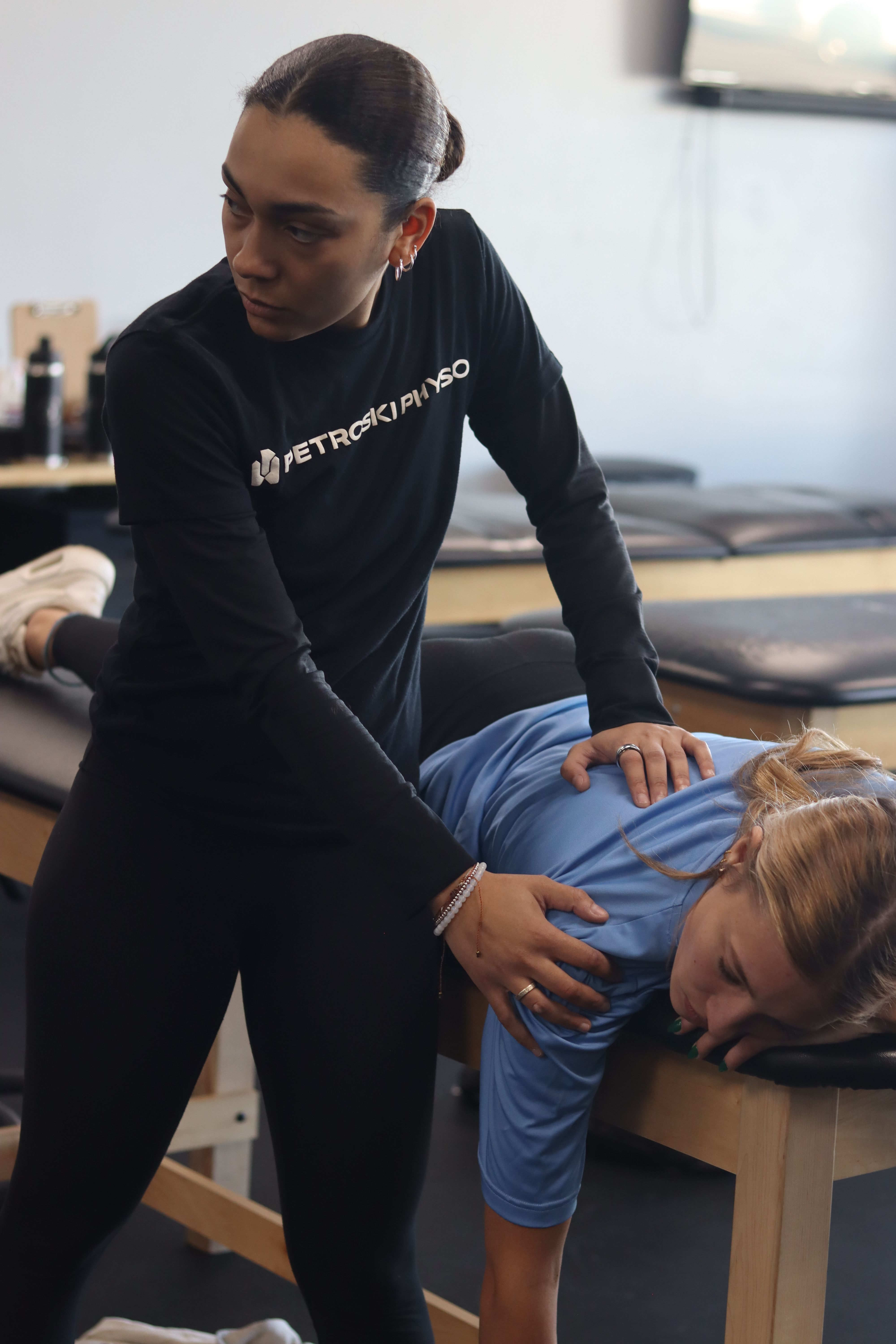
Patrick Meenan, DPT & Christian Rodgers, SDPT
What Is Scapular Dyskinesia?
Scapular dyskinesia refers to a change in how the shoulder blade moves during activity.
It is not an injury. It is not a diagnosis.
It is a movement impairment.
You will see it all the time in overhead athletes like baseball players, volleyball players, and tennis athletes. In fact, research shows it can be present in up to 60 percent of athletes, many of whom have no pain at all.
Dyskinesia vs. Scapular Winging
These two get lumped together a lot, but they are not the same thing.
Scapular dyskinesia shows up during movement. It can change depending on the task, fatigue level, or intensity. Sometimes it is painful, sometimes it is not.
Scapular winging is different. It is typically visible at rest and tends to be more consistent. It is often linked to nerve-related issues.
That distinction matters. It changes how we assess the athlete and how we build the plan.
Why It Happens
There is rarely one single cause.
Scapular dyskinesia is usually the result of multiple factors working together. That can include muscle imbalances, poor motor control, fatigue, mobility restrictions, or strength deficits throughout the body.
And that is the key point. This is not just a shoulder issue.
In most cases, it is a full-body coordination problem.
When It Actually Matters
Not every case of scapular dyskinesia needs to be “fixed.”
We care about it when it starts to affect how you feel or perform.
That could look like shoulder pain, decreased performance, or reduced tolerance to training.
When it becomes relevant, it can increase stress on the rotator cuff, contribute to impingement-type symptoms, and limit how efficiently you transfer force during overhead movements.
What Is Happening Under the Surface
Proper scapular movement is about timing and coordination, not just strength.
The upper trapezius, lower trapezius, and serratus anterior all have to work together to create smooth upward rotation, posterior tilt, and external rotation of the scapula.
When that coordination breaks down, mechanics change. And when mechanics change, stress at the shoulder increases.
The Role of Fatigue
Fatigue is one of the biggest drivers of scapular dyskinesia.
In sports that require repeated overhead motion, mechanics tend to break down as the athlete gets tired. Muscle timing becomes less efficient and compensation patterns start to show up.
This is why an athlete can look great early in a session but move very differently later on.
If you are not assessing and training under fatigue, you are missing a big part of the picture.
How We Assess It
There is no single test that gives you the answer.
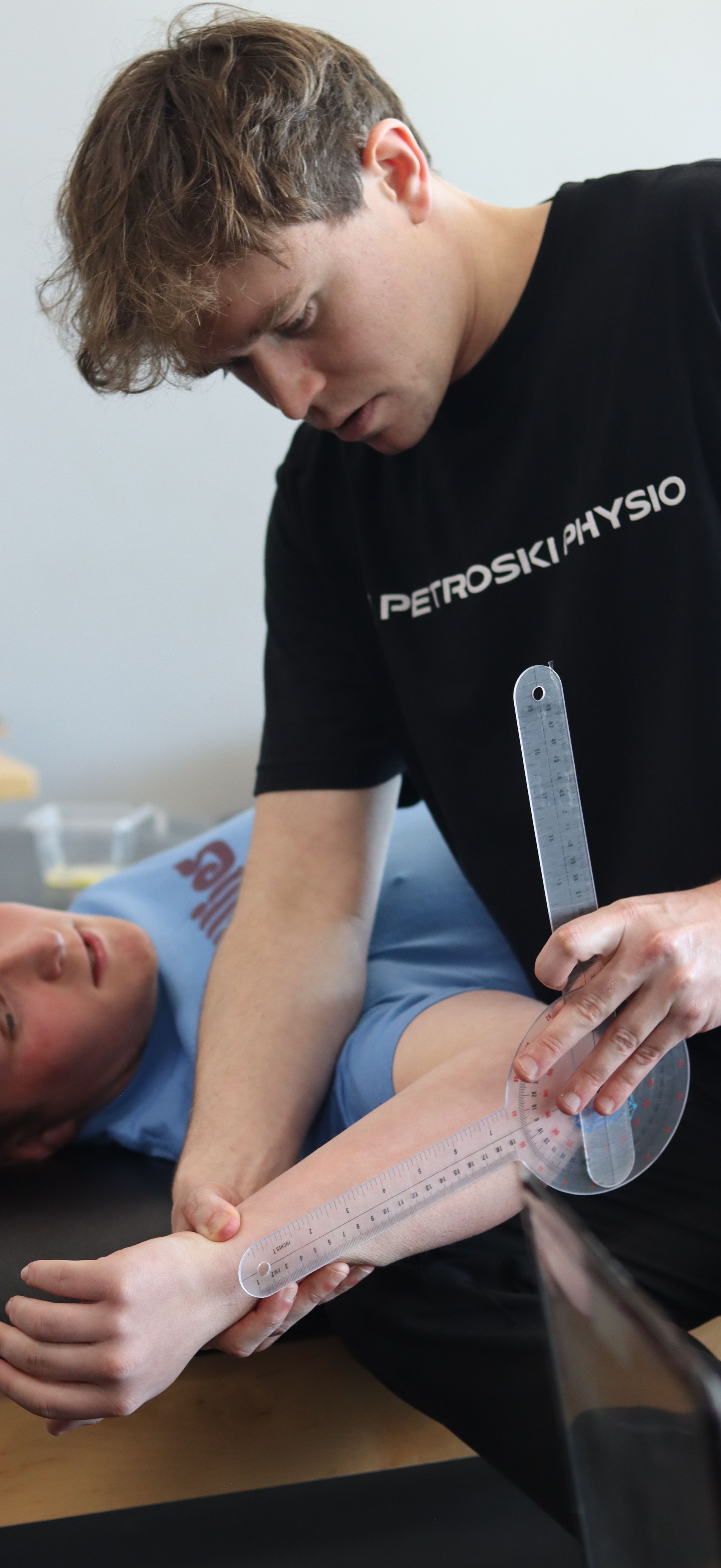
We look at how the athlete moves across multiple conditions. That includes repeated shoulder movements, side-to-side comparisons, and how things change before and after fatigue.
We also look at whether adjusting movement changes symptoms, and we zoom out to evaluate the entire kinetic chain, including the core, hips, and thoracic spine.
The goal is simple. Figure out whether the dyskinesia actually matters for that athlete.
How We Treat It
Treatment is not about chasing perfect scapular position. It is about restoring efficient movement.
We focus first on motor control, helping the athlete relearn proper timing and coordination of the scapula.
From there, we layer in targeted strength work, especially for the serratus anterior and lower trapezius, while also addressing the rest of the body.
The kinetic chain matters. If the hips and core are not doing their job, the shoulder will take on more stress.
We also train for fatigue resistance. Athletes need to be able to maintain good mechanics not just for one rep, but deep into games and practices.
At the same time, we manage training load to support recovery and long-term progress.
Key Takeaways
Scapular dyskinesia is common, especially in overhead athletes, and it is often not painful.
It is a movement issue, not a diagnosis.
Fatigue plays a major role in how it shows up.
Treatment should focus on coordination and control, not just strength.
And most importantly, you cannot separate the shoulder from the rest of the body.
Our Approach at Petroski Physio
We do not treat scapular dyskinesia in isolation.
We look at the athlete, their sport, and how they move under real conditions, including fatigue and load.
The goal is not to chase perfect movement on a table.
The goal is to reduce pain, improve performance, and build athletes who can handle the demands of their sport.
Rehab, different.
Not a clinic. Not a gym.
A place built for progress.
A team built for performance.
A culture built for you.