Why Technique Breaks Down Under Load
Poor lifting mechanics are often symptoms, not causes. Learn how mobility, strength, and stability influence technique under heavy loads and what athletes can do about it.

Dominic DeLaurentis DPT and Alan Shoykhet SPT
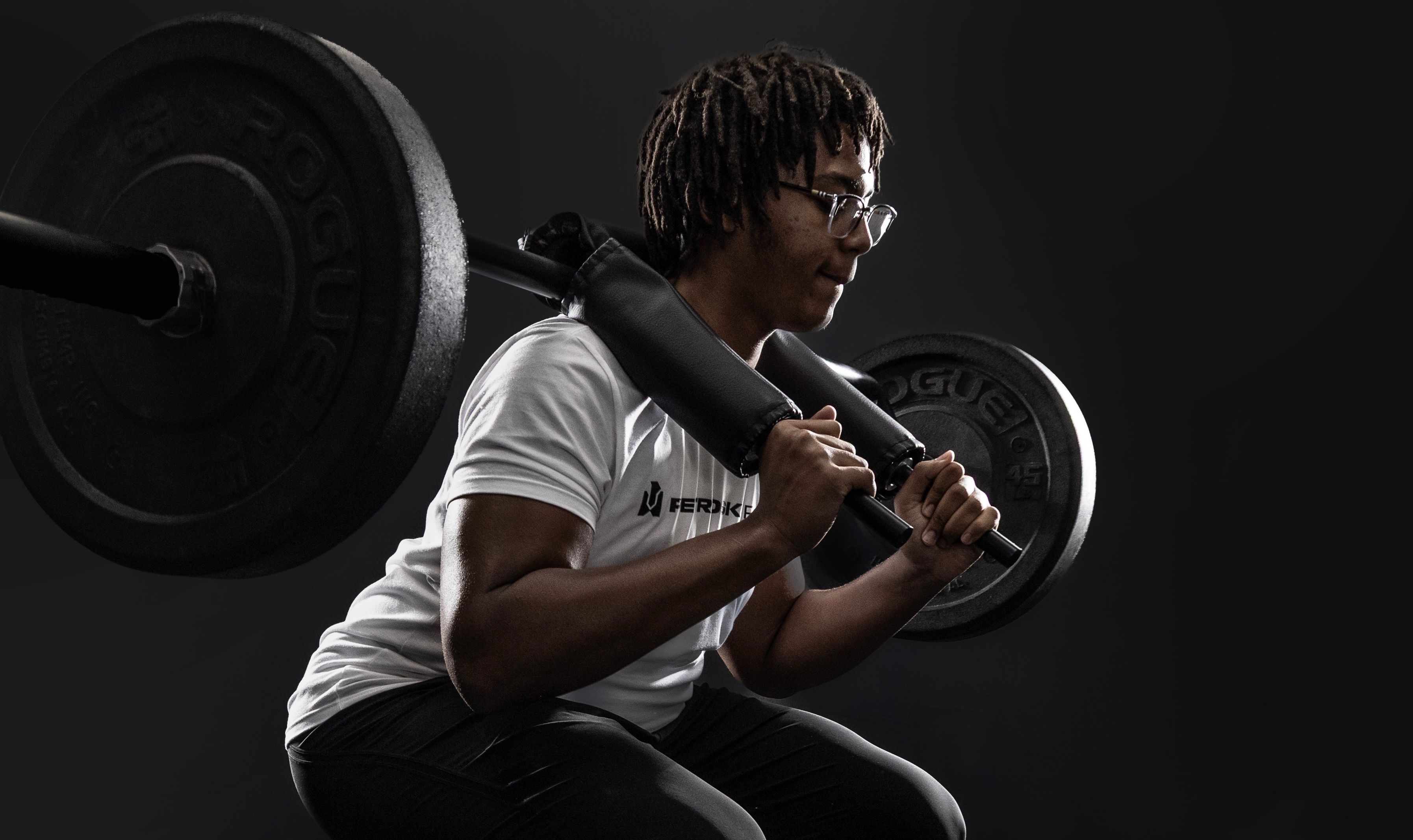
Walk into any weight room and you’ll hear the same coaching cues:
“Keep your knees out.”
“Keep your chest up.”
“Stay tight.”
Those cues can be helpful in the moment, but they often miss a bigger question:
Why did the movement break down in the first place?
When technique changes during a squat, bench press, or deadlift, the visible fault is usually not the actual problem. More often, it’s the body’s solution to a limitation somewhere else.
At Petroski Physio, we don’t just look at where a lift looks wrong. We look at when the breakdown starts and what may be driving it. Understanding the root cause helps athletes improve performance, lift more efficiently, and reduce their risk of injury.
Good Technique Starts Before the Bar Moves
Most people think of technique as what happens during the lift.
In reality, it starts before the first rep.
Foot position, hand placement, bar setup, and body alignment all influence how the movement unfolds. Small setup errors can become major compensations once the weight gets heavy.
If an athlete begins in a poor position, the body will eventually find another way to complete the lift. The heavier the load becomes, the more obvious those compensations tend to be.
Stability Comes Before Movement
After the bar is unracked, there should be a moment of control before the lift begins.
That means creating tension, establishing a brace, distributing weight evenly, and feeling stable under the load.
Athletes who appear shaky or inconsistent before the first rep often struggle to maintain position once the movement starts. Stability isn’t just about strength. It’s about creating a foundation that allows force to be transferred efficiently throughout the lift.
The Descent Often Reveals the Problem
Many technical faults first appear during the lowering phase of a movement.
You might notice:
A hip shifting to one side
Knees collapsing inward
The chest falling forward
Uneven weight distribution between legs
The common reaction is to simply cue the athlete to correct the position.
But effective coaching requires asking why the position changed in the first place.
A hip shift may reflect limited mobility on one side. A collapsing knee could point to inadequate strength or control. A forward trunk lean may be compensating for restrictions elsewhere in the body.
The visible movement is often just the symptom.
Eccentric Strength Matters More Than Most Athletes Realize
One of the most overlooked aspects of lifting performance is eccentric strength.
Eccentric strength refers to your ability to control a load as you lower it.
Athletes with strong eccentric control can absorb force, maintain positions, and stay balanced throughout a movement. Athletes who lack it often lose posture, shift weight, or rely on compensations as the load increases.
This quality extends far beyond the weight room.
Eccentric strength plays a major role in:
Landing from a jump
Decelerating before a cut
Absorbing force during sport
Changing direction efficiently
Maintaining control under fatigue
If you can’t control force, it’s difficult to produce force effectively.
Heavy Loads Reveal What Light Loads Hide
Most athletes can make a movement look good when the weight is easy.
The real test comes when intensity rises.
As loads increase, the nervous system relies more heavily on automatic movement patterns. Athletes stop consciously thinking about every detail and instead fall back on whatever strategy their body trusts most.
If a mobility restriction, strength deficit, or asymmetry exists, heavy loads tend to expose it.
This is why technique flaws often become more noticeable as athletes approach maximal effort.
The weight room doesn’t create movement problems.
It reveals them.
Not Every Asymmetry Is a Problem
Athletes are not perfectly symmetrical.
Nor do they need to be.
Small side-to-side differences are completely normal, especially in sports that involve repetitive movements, dominant limbs, or position-specific demands.
The question isn’t whether an asymmetry exists.
The question is whether it affects performance, worsens under load, or contributes to pain.
We pay closer attention when:
The asymmetry becomes larger as weight increases
Performance begins to decline
Symptoms develop
The athlete consistently compensates across multiple movements
The goal isn’t perfect symmetry. The goal is efficient and repeatable movement that supports performance.
Why This Matters Beyond the Weight Room
Strength exercises occur in controlled environments.
Sports do not.
If an athlete consistently demonstrates poor movement strategies during a squat or deadlift, those same strategies often appear during higher-speed athletic movements such as sprinting, jumping, cutting, and landing.
The difference is that sport happens faster and under far greater demands.
Addressing limitations in the weight room gives athletes a stronger foundation when they return to competition.
The Takeaway
When evaluating technique, don’t focus solely on the visible mistake.
Look at the entire movement.
Identify when the breakdown starts. Determine whether mobility, strength, stability, or coordination is driving the compensation. Then address the root cause rather than chasing symptoms.
The best athletes aren’t necessarily the ones with textbook-perfect technique.
They’re the ones who can consistently produce force, control movement, and maintain efficiency as demands increase.
That’s where performance improves. And that’s often where injuries become less likely.
Rehab, different.
Not a clinic. Not a gym.
A place built for progress.
A team built for performance.
A culture built for you.