Dry Needling for Athletes
Taylor Bracy
Dry Needling for Athletes: What It Is, Why It Works, and When We Use It
What Is Dry Needling?
Dry needling is a technique where a trained physical therapist uses a very thin needle to target tight or overactive muscles, commonly known as trigger points. The goal is to reduce pain, improve mobility, and restore normal muscle function. For athletes, this translates to moving better, recovering faster, and returning to sport with greater confidence.
Why Dry Needling Works
Dry needling works by helping “reset” the muscle, reducing excessive tension and improving how it functions. Athletes often experience quick improvements in range of motion, decreased muscle tightness, and more efficient muscle activation. It also targets pain at its source rather than just masking symptoms. That said, dry needling is not a standalone solution. The best outcomes occur when it is combined with strength training, mobility work, and sport-specific rehabilitation. At Petroski Physio, we follow a test, treat, and re-test approach to ensure the intervention is actually producing meaningful change.
Common Injuries We Treat with Dry Needling
One of the most common conditions we treat is sprinting-based hamstring injuries, especially in athletes involved in soccer, track, football, and baseball. These athletes often experience tightness or pulling in the back of the thigh, pain during sprinting or acceleration, and recurring strains. Dry needling helps reduce muscle guarding, improve mobility, and restore proper sprint mechanics. Following treatment, we build strength and gradually reintroduce sprinting.
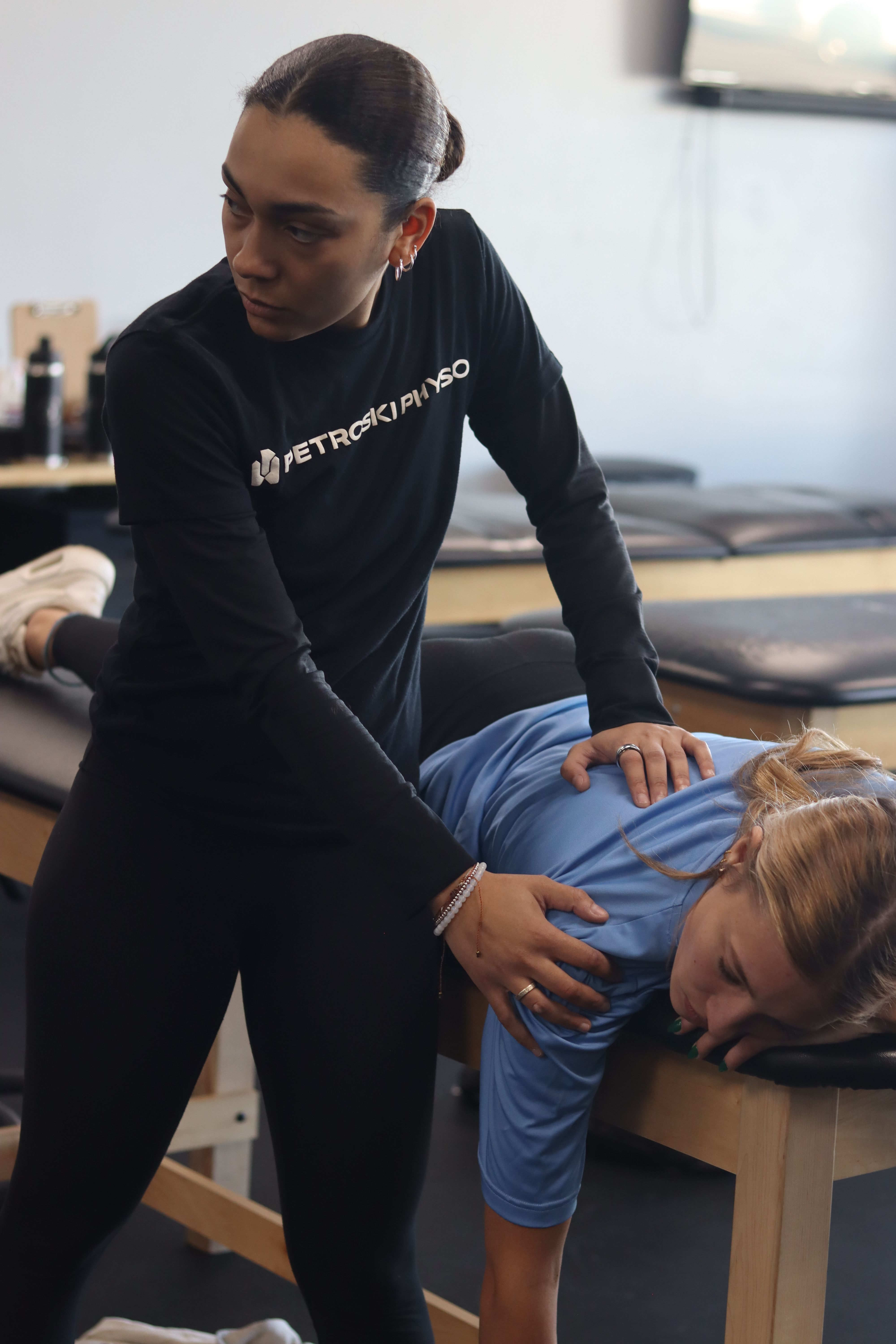
We also frequently use dry needling for shoulder and throwing-related injuries, particularly in pitchers and other overhead athletes. These individuals often report shoulder tightness, loss of motion, decreased throwing velocity, or even elbow discomfort due to overload. By targeting key muscles such as the rotator cuff, latissimus dorsi, and pecs, we can restore motion and reduce stress on the elbow. We also emphasize the role of the cervical spine, as it directly impacts shoulder strength and control.
Low back pain is another common issue across all sports. Athletes typically describe stiffness, tightness, or pain with lifting, running, or rotation, often accompanied by recurring episodes of a “tight back” during the season. Dry needling allows us to target deep stabilizing muscles, reduce guarding, and improve movement quality. However, long-term success depends on strengthening and proper movement retraining.
Cervical spine, or neck-related issues, are also highly relevant, especially in contact sports and overhead athletes. Symptoms may include neck stiffness, shoulder or arm weakness, headaches, or a general sense of poor upper body control. Because the neck plays a critical role in coordination and neuromuscular function, improving its mobility and reducing muscle tone can have a significant impact on performance. Dry needling in this area often leads to immediate improvements in shoulder function and overall control.
Safety First
At Petroski Physio, safety is non-negotiable. We rely on precise anatomical knowledge to guide needle placement, ensuring we avoid nerves and blood vessels while effectively targeting the intended muscles. Proper positioning and continuous reassessment are key components of every session. Patients may feel a brief ache or a quick muscle twitch during treatment, both of which are normal responses and often indicate that the targeted area has been effectively engaged.
The Most Important Takeaway
Dry needling is a tool, not the entire plan. It plays an important role in reducing pain, improving movement, and preparing the body for more demanding rehabilitation work. However, lasting results come from building strength, improving control, and progressing through sport-specific training.
Rehab, different.
Not a clinic. Not a gym.
A place built for progress.
A team built for performance.
A culture built for you.