Why Your Arm Feels Sore and Tired After Throwing and what to do about it.
Dominic DeLaurentis

Rehab Isn’t Linear. Here’s How Progress Actually Works
Most people go into rehab expecting a timeline. Each week should feel a little better, strength should steadily improve, and at some point everything clicks and you are back. When that does not happen, it throws people off. You have a good week followed by a session where everything feels heavier. You move well one day and feel off the next. It starts to feel inconsistent.
It is not inconsistent. That is just how rehab works.
Rehab is not simply about getting stronger. It is about how your body adapts to stress over time. Every session places a demand on your system. Your body responds to that demand, then recovers, then adapts. Those phases are always overlapping. You can be improving strength while also carrying fatigue. You can be moving better while still dealing with soreness or residual swelling. You can even perform worse in a session and still be progressing overall.
That is why progress does not show up in a straight line. What matters is not whether every session is better than the last. What matters is the overall direction.
This is also where a lot of rehab falls short. Many decisions are still based on how something looks or how it feels in the moment. Early in the process, that works. Pain decreases, range of motion improves, and it is easy to see progress. Later on, that becomes less reliable. At that point, the question is no longer whether something feels better. The question is whether it can perform.
Performance means being able to produce force at the level your sport requires, absorb load without breaking down, and repeat that consistently. Those qualities are harder to judge without objective data, and they do not improve in a perfectly predictable way.
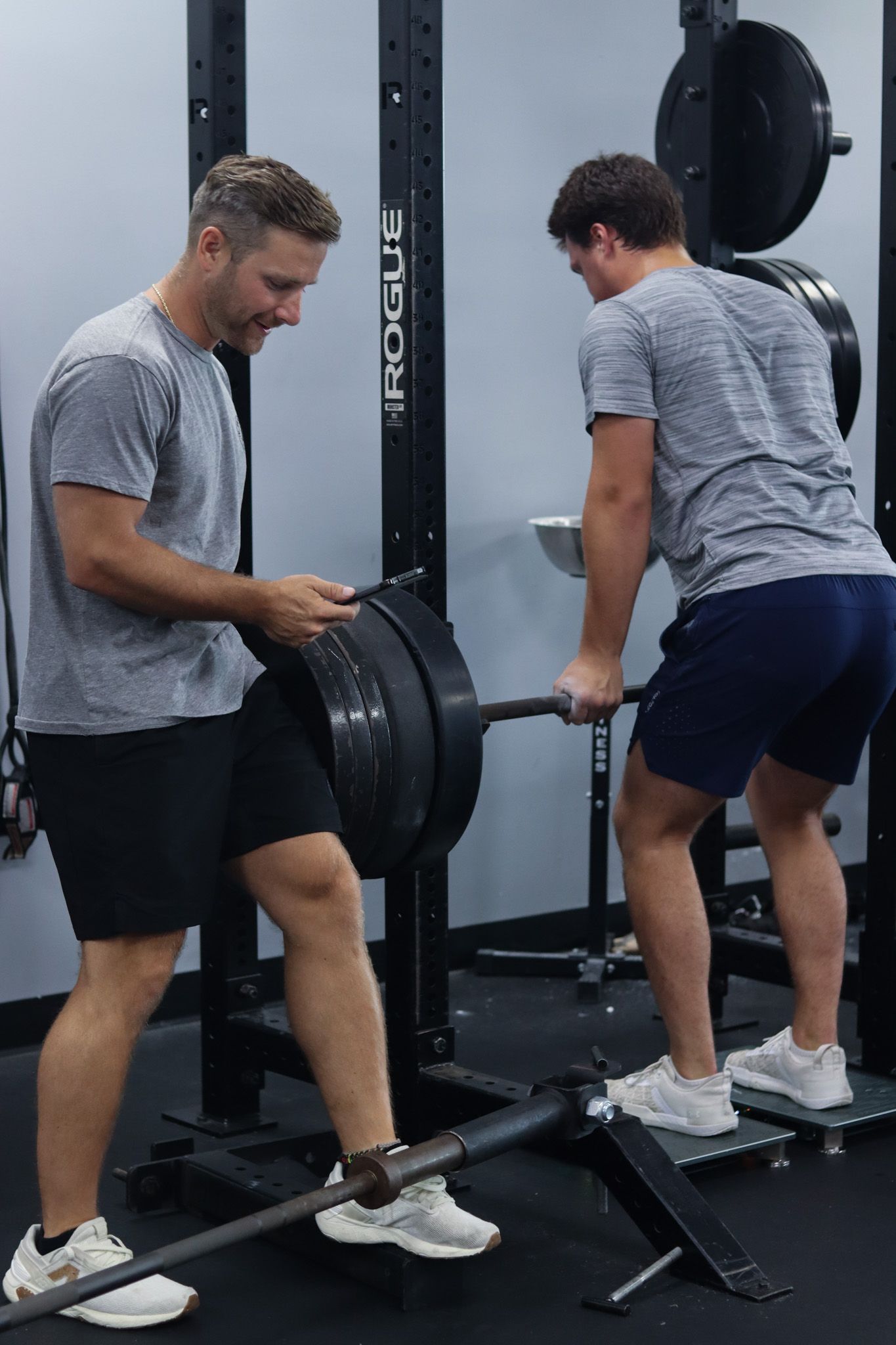
Instead of relying on a single moment, progress needs to be tracked over time. Tools like force plates allow us to measure how an athlete produces and absorbs force during movements like jumping and landing. That gives a clearer picture of power, control, and how each side of the body is contributing. The goal is not just to collect numbers. It is to understand how the athlete is functioning and whether they are actually improving in the areas that matter.
One of the biggest challenges in rehab is defining what ready actually looks like. Many athletes are compared to general population averages, but those do not reflect the demands of high level sport. An athlete can fall within a normal range and still be far below their true level. The most useful reference point is the athlete’s own pre injury performance. That shows what they are capable of at their best and allows us to measure how far they are from that level.
A single test does not provide enough information to make that decision. Performance can change based on fatigue, training load, and even the timing of the session. One result might look good or bad depending on when it is taken. What matters more is how performance is trending over time. If force output is increasing, movement is becoming more consistent, and the athlete is handling more load without a drop off, that is a much clearer sign of progress.
Another important part of the process is understanding how the body responds to training. When we look at performance before and after a session, we can see how much that session impacted the system. A noticeable drop in output shows that the session placed a higher demand on the athlete. That information helps guide how much to push, when to pull back, and how to progress without overloading the system.
All of this matters because rehab is not just about getting to a certain point in time. It is about making sure the body is actually prepared for what comes next. Returning to sport requires the ability to handle force, produce power, and repeat those efforts without compensation. If those qualities are not restored, the risk of reinjury stays high even if everything looks fine on the surface.
If you are going through rehab, it is normal for things to feel up and down. A single bad session does not mean you are going backwards, and a good day does not mean you are ready. What matters is whether you are improving over time and whether your body is adapting to the demands being placed on it.
Rehab is not linear. But when you understand what is actually being measured and why, it becomes a lot easier to see where you are and what needs to happen next.
Rehab, different.
Not a clinic. Not a gym.
A place built for progress.
A team built for performance.
A culture built for you.