Why Game-Like Training Matters: The Missing Piece in Return to Sport
Pat Meenan
Why Game-Like Training Matters: The Missing Piece in Return to Sport
When most athletes think about rehab or performance training, they picture lifting, sprinting, or jumping. All of that matters. But if your goal is to get back to your sport and actually perform, that’s only part of the process.
At some point, training has to start looking like the game.
Sports are unpredictable. You’re reacting to opponents, adjusting your speed, changing direction, and making decisions in real time. That’s why one of the biggest gaps we see in rehab and performance programs is a lack of game-like, reactive training.
Building the Foundation First
Before anything else, athletes need the physical tools to move well.
At the core, sport movement comes down to how well you can produce and control force. That includes producing enough force, producing it quickly, directing it properly, and doing it at the right time.
This is what allows an athlete to accelerate, slow down, cut, jump, and sprint effectively.
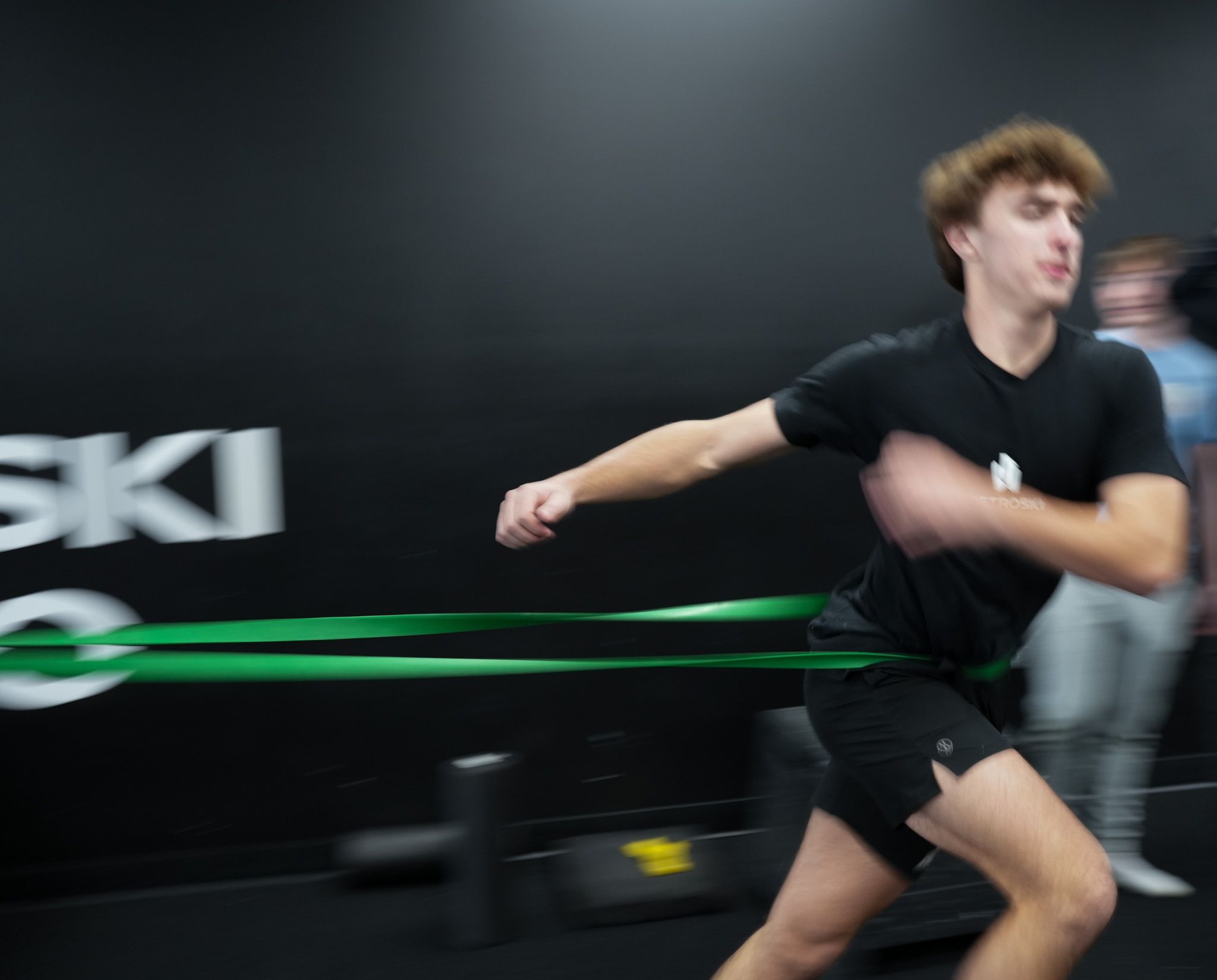
Think about it like this. Acceleration is about pushing into the ground to move forward. Deceleration is about absorbing force and staying in control. Changing direction requires both, plus the ability to reposition and go again.
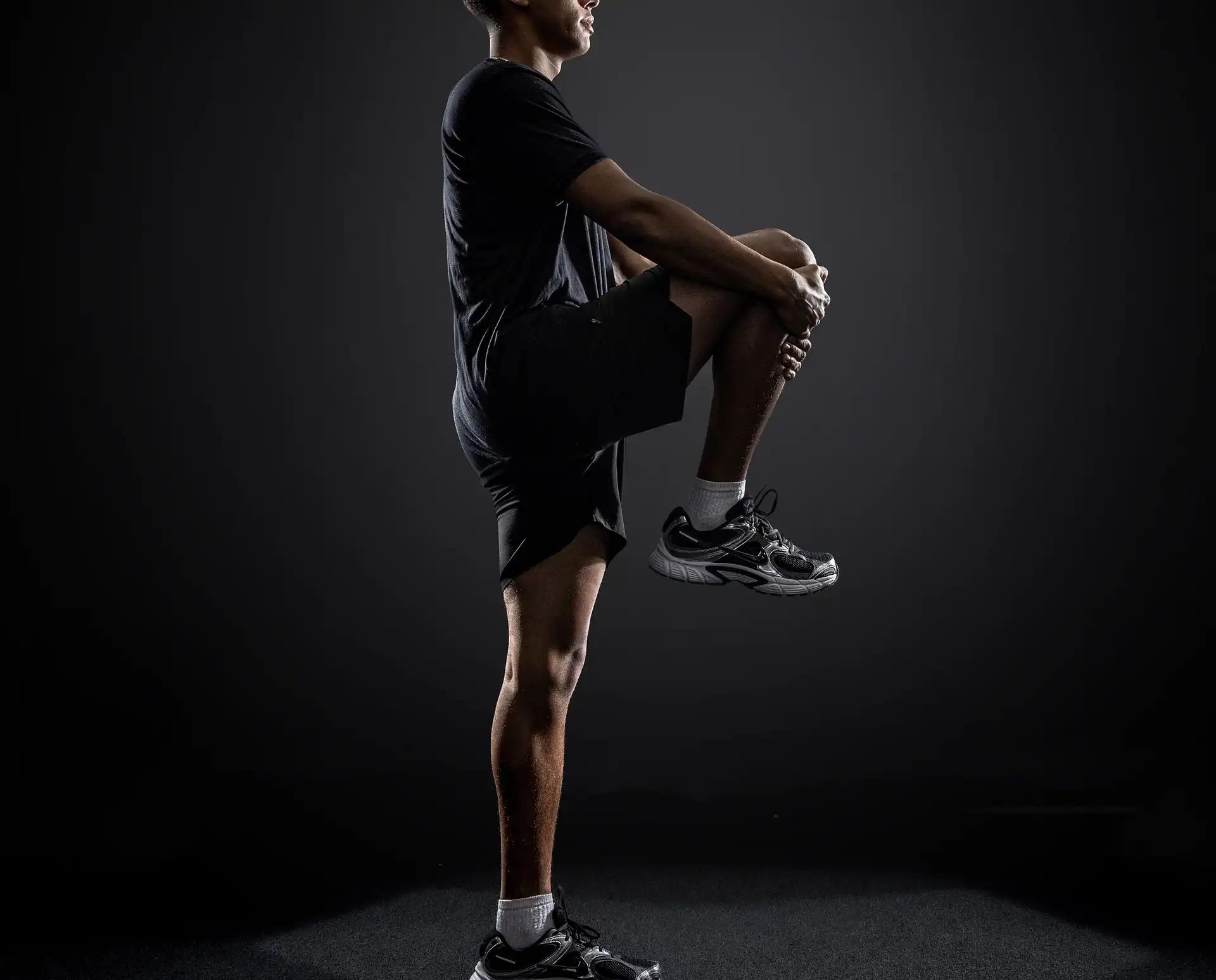
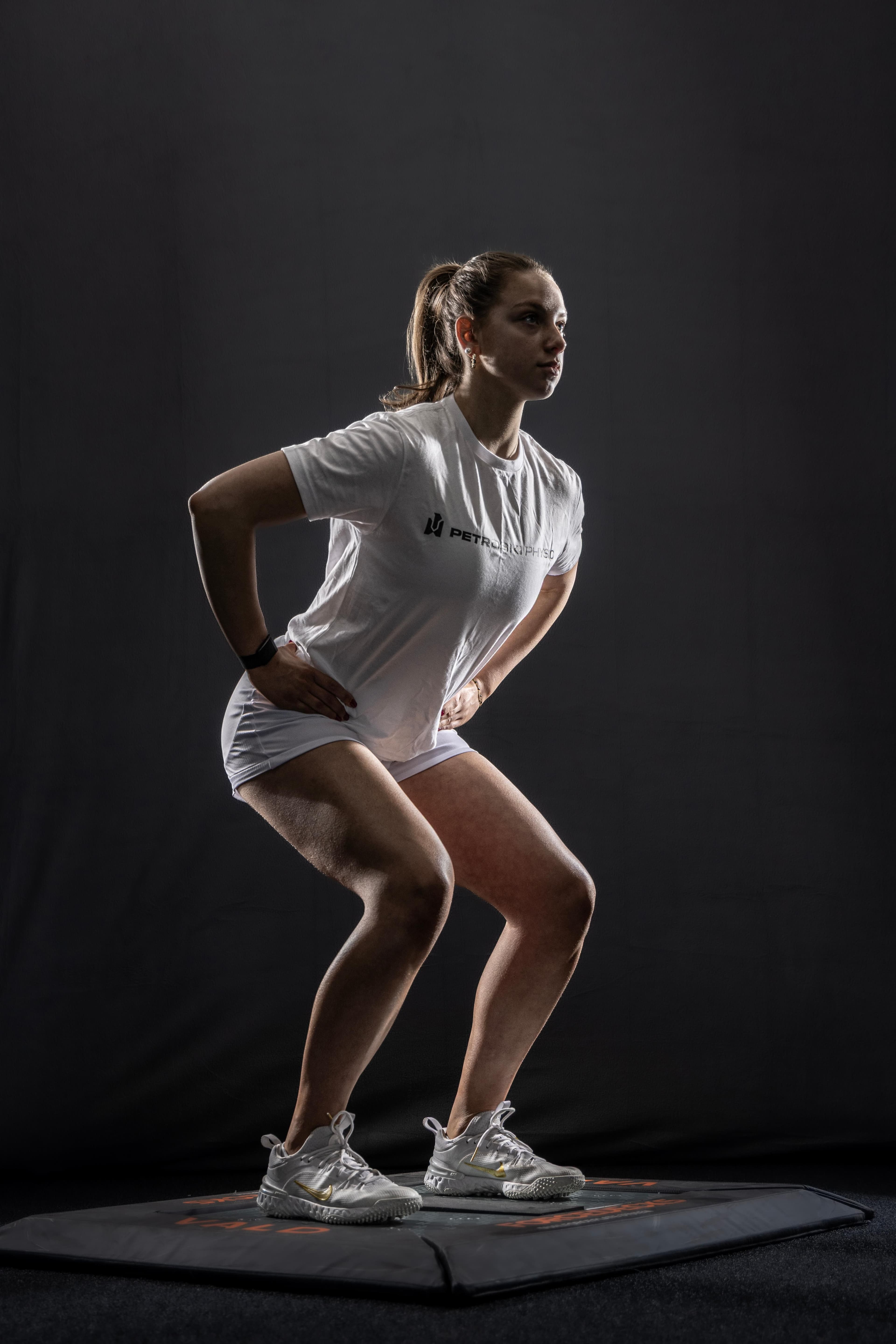
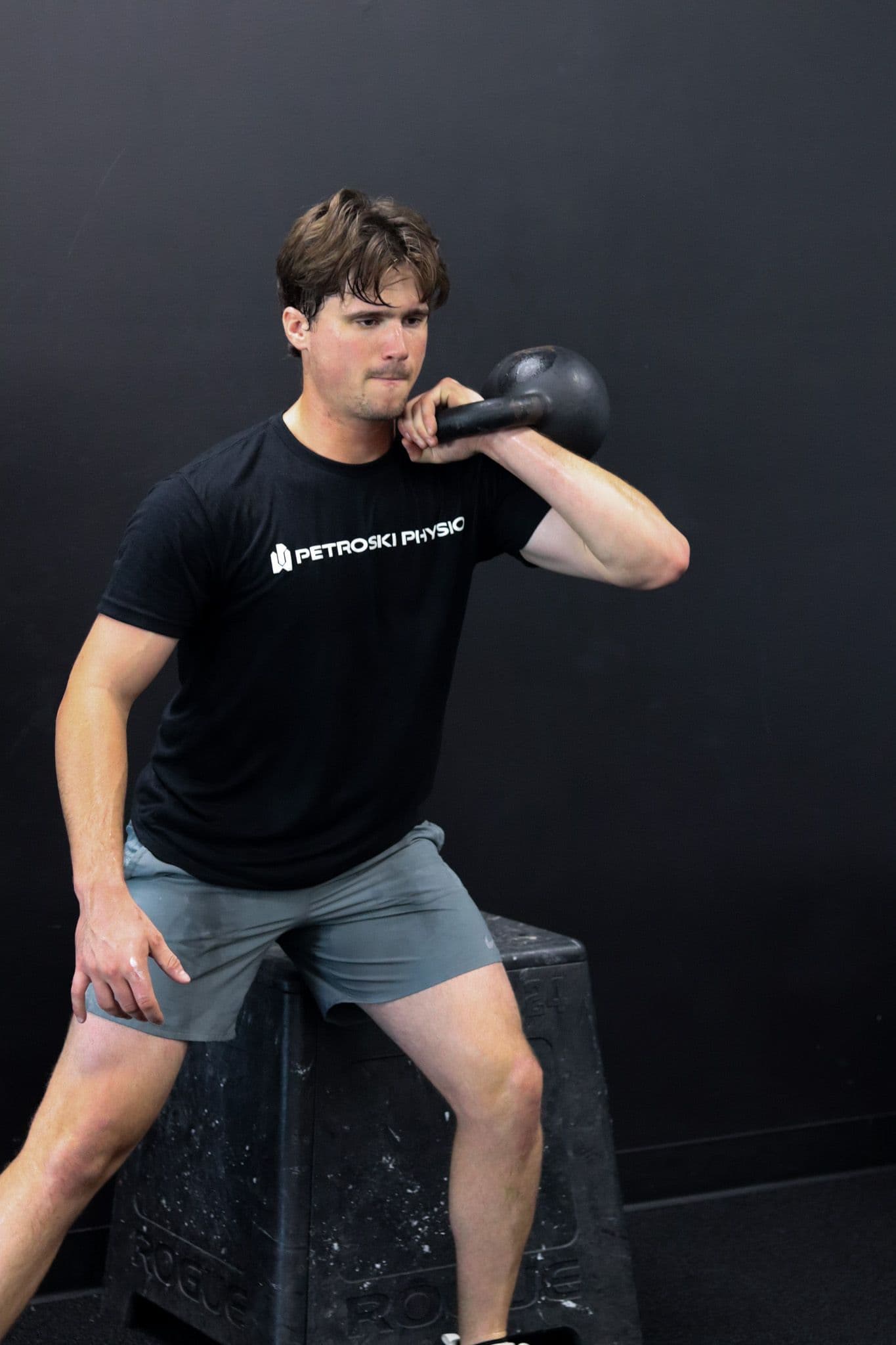
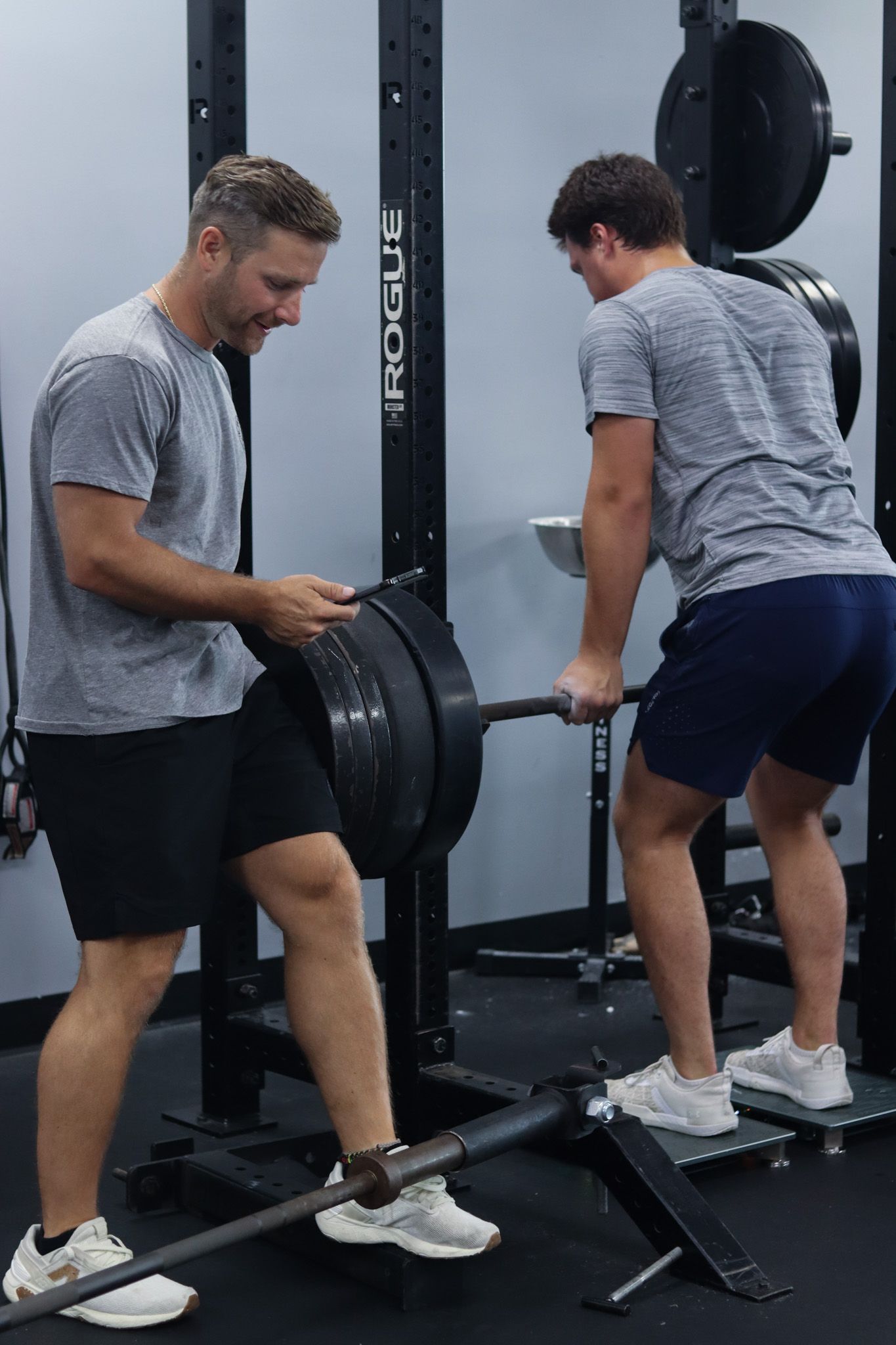
That’s why early training focuses on foundational patterns like squats, hinges, lunges, jumping, running, and basic change-of-direction drills. These build strength, coordination, and control.
But this is also where a lot of programs stop. And that’s where athletes start to fall short.
Speed, Stops, and Direction Changes
Most sports are built on short bursts of movement.
A basketball player attacking the rim. A football player making a cut. A soccer player chasing a loose ball. These are all quick accelerations followed by rapid stops or changes in direction.
To do this well, an athlete needs to brake, control their body, and then re-accelerate. That requires strength, balance, coordination, and good positioning through the hips, knees, and ankles.
Plyometrics and speed work help develop this. They teach athletes how to produce force quickly and handle impact when landing or stopping.
But even if someone looks great in these drills, that doesn’t mean they’re ready for sport.
Because sport is not pre-planned.
Change of Direction vs Agility
This is one of the most important distinctions we make.
Change of direction is planned. The athlete knows where they’re going and when they’re going there. It’s about clean mechanics and efficiency.
Agility is different. It’s reactive. It involves reading a situation and responding to it.
Most traditional drills train change of direction. Cone drills, ladder drills, set patterns. These are useful, but they don’t reflect what actually happens in a game.
In real situations, athletes are reacting to a defender, a ball, a teammate, or space opening up. That decision-making piece is what turns movement into performance.
Shifting Into Game Mode
Once the foundation is there, training needs to evolve.
This is where we start introducing reactive and competitive elements. The goal is to make training feel more like the sport itself.
That might look like two athletes facing each other in a mirror drill, where one reacts to the other’s movement. Or reaction-based drills where direction changes are triggered by a coach’s cue or a visual signal.
We also start incorporating sport-specific elements. A basketball player dribbling while changing direction. A soccer player reacting to the ball. A football player adjusting to a pass.
At this point, the athlete is no longer just thinking about movement. They’re reacting. That’s the shift that matters.
Why Competition Changes Everything
There’s something that happens when you introduce competition that you can’t replicate with structured drills.
Effort goes up. Speed increases. Focus sharpens.
Athletes naturally move differently when there’s a goal, an opponent, or something on the line.
There’s also a concept in skill development called “repetition without repetition.” It means practicing similar movements in slightly different situations rather than doing the exact same rep over and over.
Game-like environments create this automatically. Every rep is a little different. The athlete has to adjust based on what’s happening in front of them.
That’s what builds adaptability. And that’s what shows up in sport.
The End Goal
The purpose of rehab or performance training is simple. Prepare the athlete for the demands of their sport.
That means progressing from general strength and movement, into speed and power, then into change of direction, and finally into reactive, game-like situations.
As athletes move through this process, training should start to feel more like the sport itself.
By the end, it often looks like controlled competition, small-sided games, or reactive drills that challenge both the body and the brain.
What This Means for Athletes
Strength and conditioning matter. Speed matters. But they are not the full picture.
To truly be ready for sport, you need to be able to accelerate, decelerate, change direction, and react to what’s happening around you. You need to be comfortable in unpredictable situations.
The closer your training gets to the actual game, the more prepared you’ll be when it’s time to return.
Because the athletes who succeed aren’t just strong or fast.
They’re the ones who can read the game, react quickly, and move efficiently when everything is happening at full speed.
Rehab, different.
Not a clinic. Not a gym.
A place built for progress.
A team built for performance.
A culture built for you.