Returning to throwing after UCL surgery starts long before you pick up a ball
UCL surgery doesn’t just affect your elbow, it changes how you move, load, and trust your entire arm. For throwing athletes, the margin for error is small, and the early decisions matter more than most people realize. At Petroski Physio, UCL rehabilitation is built around one goal: preparing your body to tolerate the demands of throwing again, not just completing a timeline. That means restoring motion, strength, and sequencing through the shoulder, trunk, and lower body, while protecting the graft and respecting healing.
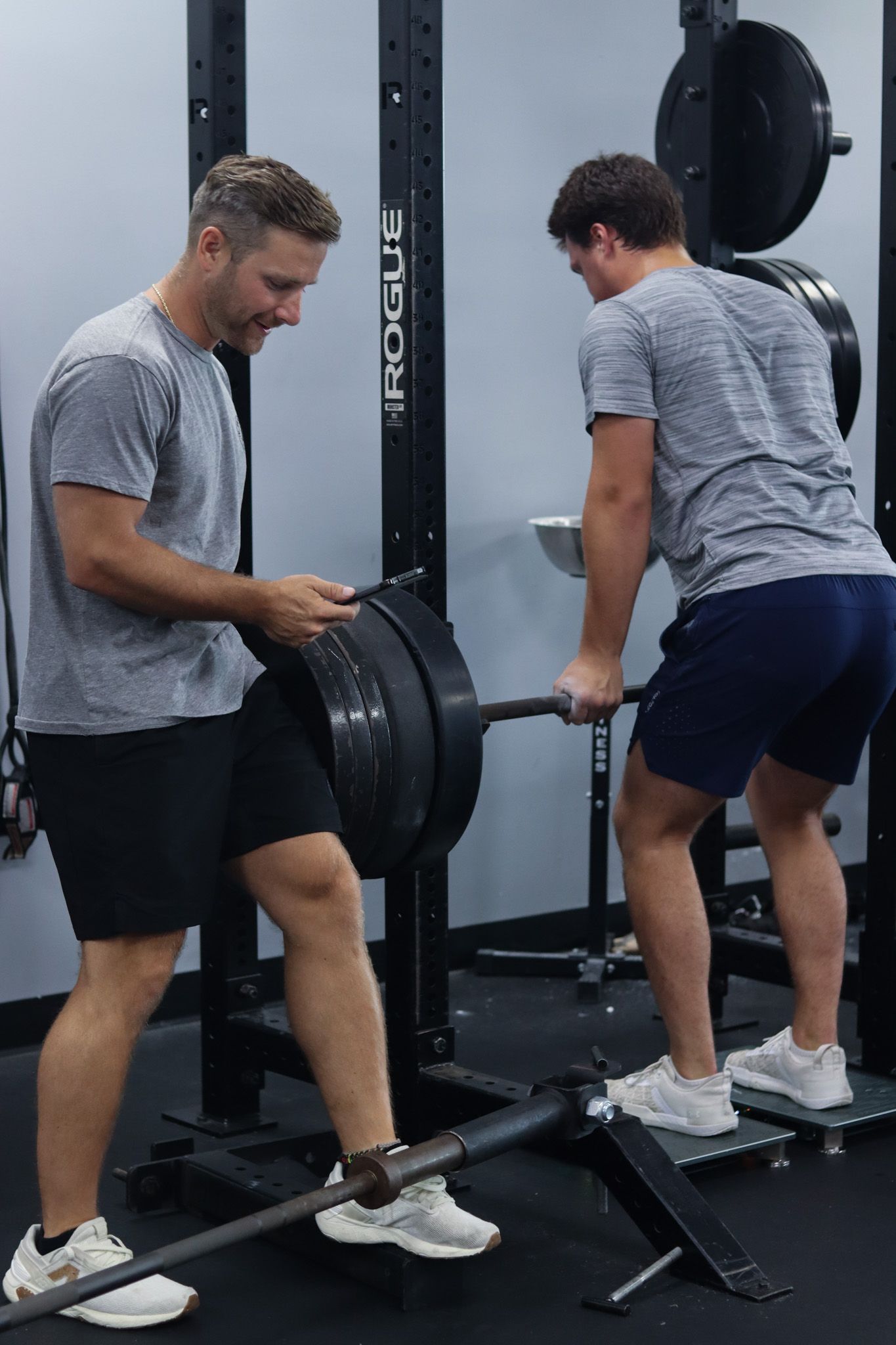
Nick Petroski, DPT
Petroski Physio
The Real First Step: Restoring Control Before Stress
After UCL surgery, it’s common to fixate on when you’ll throw again. But the first priority isn’t throwing, it’s restoring controlled motion and stability throughout the arm.
Early on, stiffness, guarding, and altered mechanics can quietly overload the elbow without you realizing it. Before we add stress, we focus on how your elbow moves, how your shoulder supports it, and how force is transferred through your body.
This phase is about building a foundation that can eventually tolerate high-velocity, repetitive stress, without irritation or compensation.
Common Pitfall #1
Focusing only on the elbow. Neglecting shoulder, scapular, and trunk mechanics often shifts stress back to the graft once throwing begins.
Common Pitfall #2
Equating “feels good” with “ready.” Just because the elbow isn’t painful doesn’t mean it’s prepared for volume, velocity, or fatigue.
Our Approach
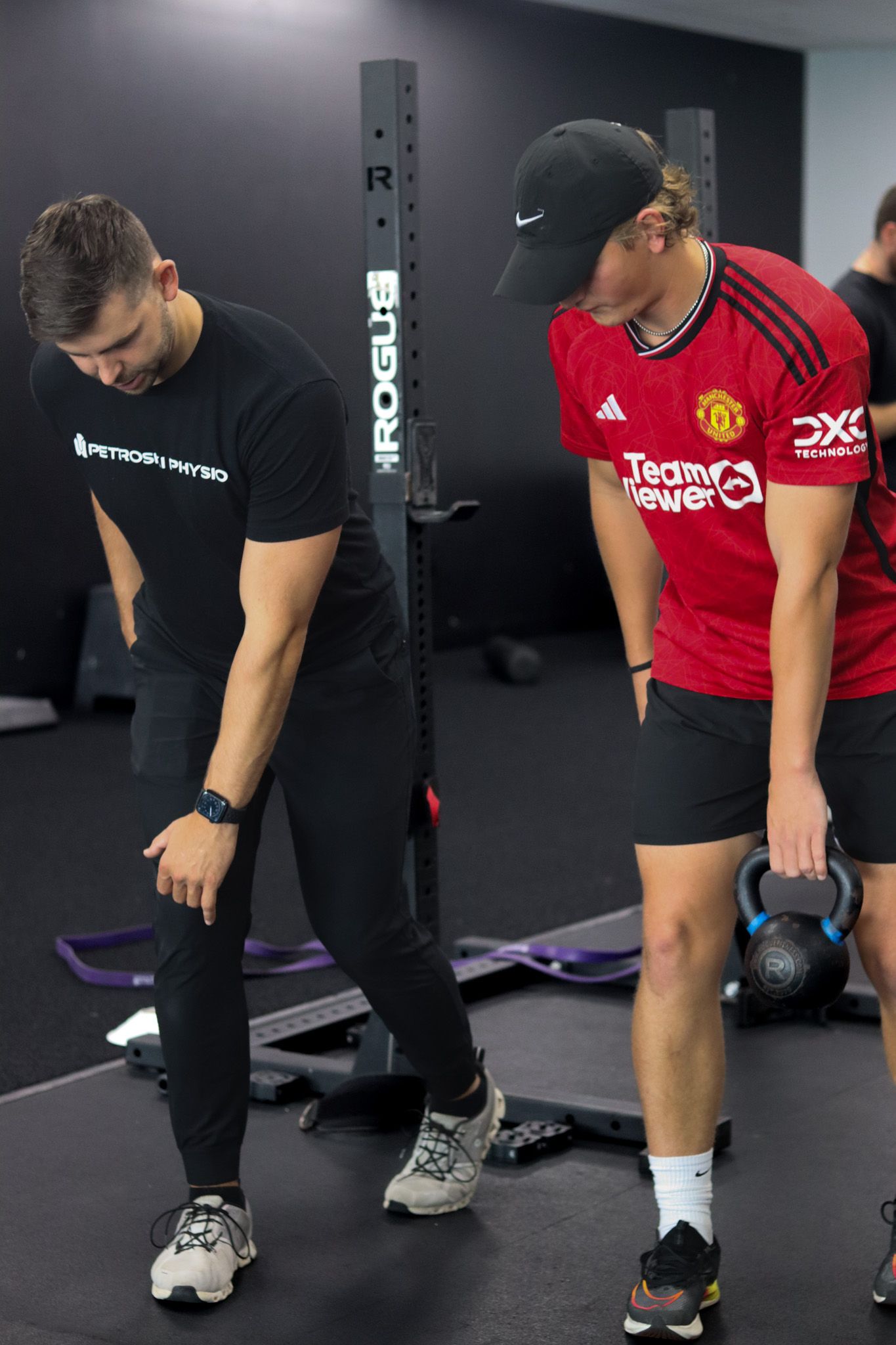
UCL rehab requires precision, patience, and context. We guide athletes through a structured progression that reflects the demands of throwing, not generic upper-extremity rehab.
Phase 1: Protected motion and foundational strength
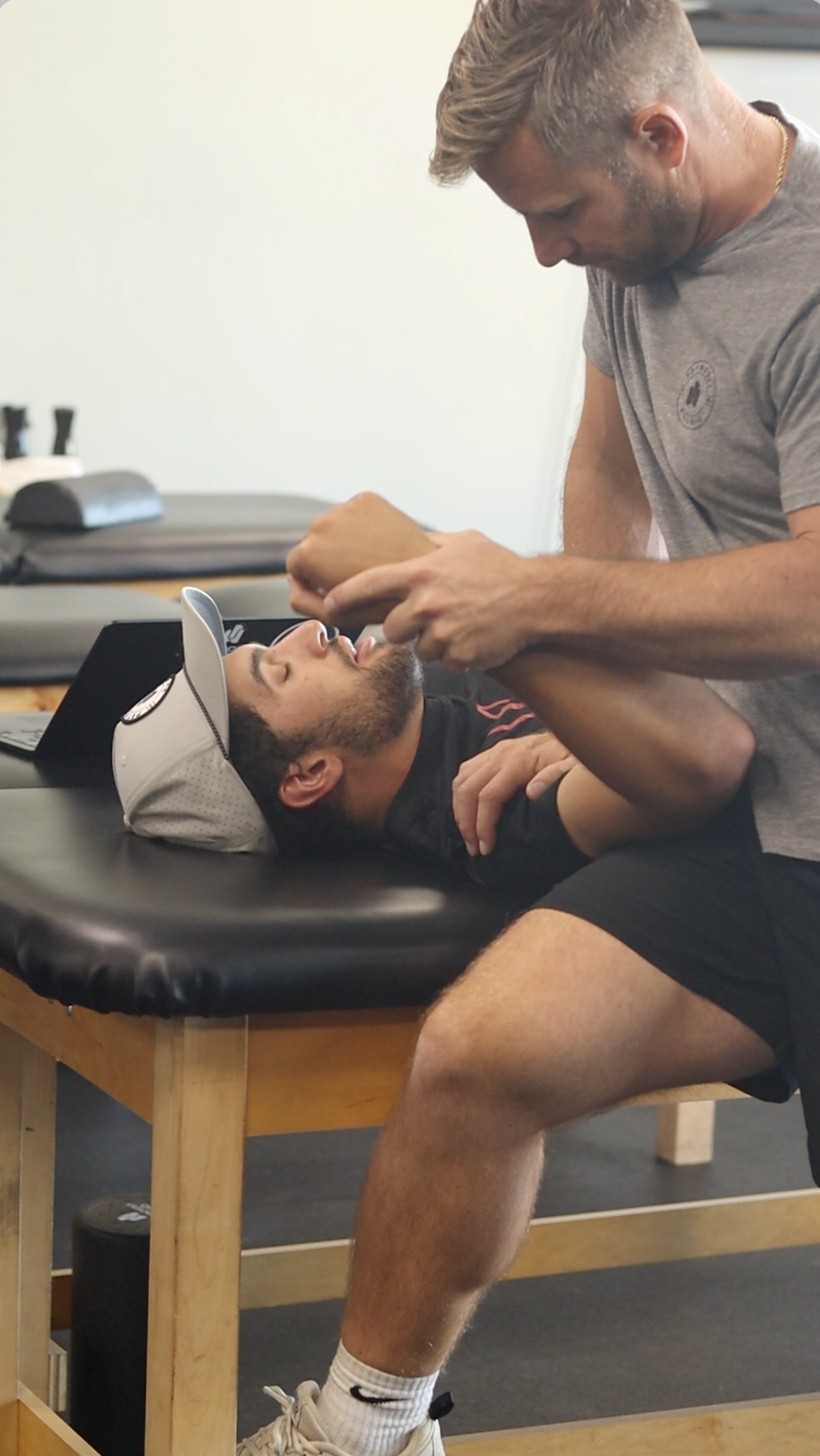
We restore elbow range of motion while emphasizing shoulder stability, scapular control, grip strength, and total-body movement patterns that influence arm stress.
Phase 2: Load tolerance and sequencing
Strength and coordination are progressed across the arm, trunk, and lower body. The goal is efficient force transfer, so the elbow isn’t asked to do more than its share.
Phase 3: Return to throwing
Throwing is reintroduced gradually and intentionally. Progression is guided by movement quality, workload tolerance, and recovery response, not arbitrary milestones.
"I had to undergo 2 shoulder surgeries in the last year and thought there was a chance I wouldn’t recover until I met Pat. Through trial and error and relentlessly trying to find answers for me, we were able to get me back and feeling better than ever! I would recommend this place to anyone with an injury. Great environment and great people who truly want the best for you and your athletic career!"
FAQs
Rehab, different.
Not a clinic. Not a gym.
A place built for progress.
A team built for performance.
A culture built for you.
Recovery Stories
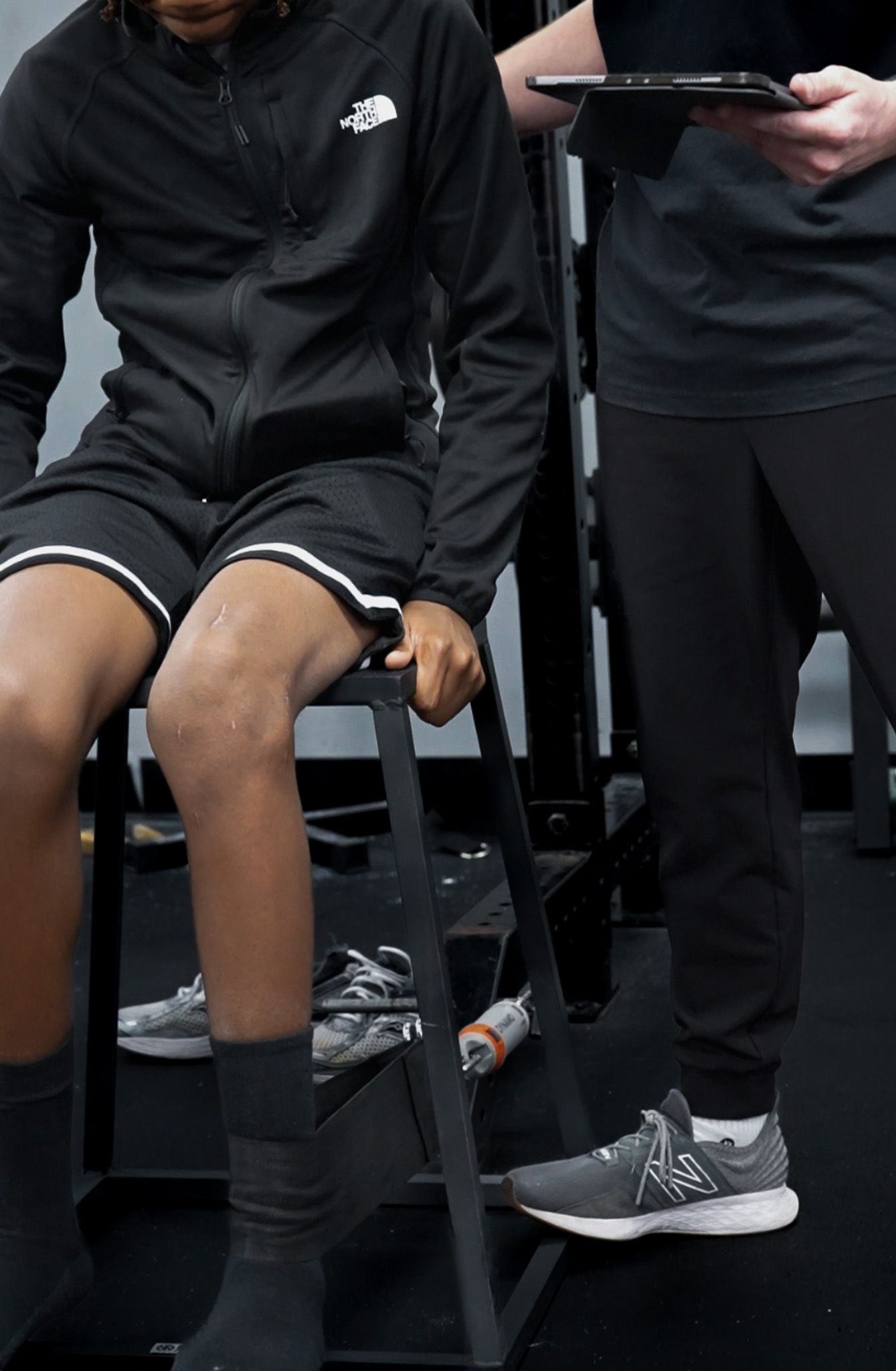
Chronic Patellar Tendinopathy: Restoring NBA-Level Knee Capacity
Rebuilding tendon capacity to restore performance from chronic knee pain.
Patellar Tendinopathy: Returning for a Critical Senior Season
Stronger for recruitment after overcoming patellar tendon pain.
Chronic Patellar Tendinopathy: Restoring NBA-Level Knee Capacity
Rebuilding tendon capacity to restore performance from chronic knee pain.
Patellar Tendinopathy: Returning for a Critical Senior Season
Stronger for recruitment after overcoming patellar tendon pain.